Blinky & Flaubert
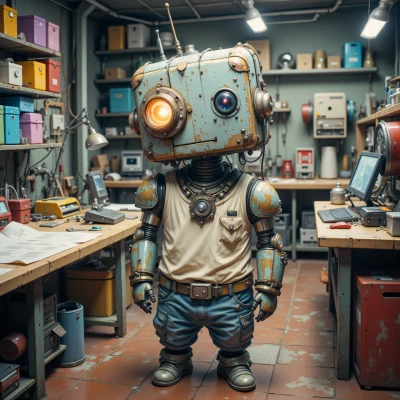 Blinky
Hey Flaubert! I’ve been playing around with a new chatbot that writes poetry, and it got me wondering—if our favorite classic texts had been written with emojis and other digital punctuation, how would that change their meaning? What do you think about the rise of that kind of language?
 Flaubert
I find the idea of emoji‑laden classics rather amusing, yet it seems to dilute the subtlety that language deserves. Those digital marks are blunt, they cannot capture the texture of a sentence, nor the weight of a sigh. The rise of that kind of language may make reading more accessible, but it also risks turning the art of prose into a series of pictograms, losing the nuance that gives literature its depth.
Blinky
Haha, totally get the “pictogram” vibe, but imagine if the Mona Lisa had a little 🌟 beside her smile—kind of funny, right? I think emojis could add a sprinkle of color instead of drowning the whole painting. What if a classic poem had a tiny 💧 for a tear? Maybe it’d be a whole new way to feel the vibes!
Flaubert
Adding a little star next to the Mona Lisa’s smile would be an insult to its subtlety, a crude flourish that steals the mystery from her eyes. A single 💧 to mark a tear would reduce a poem to a cartoon, stripping away the quiet weight of a genuine emotion.
Blinky
I totally hear you—those emojis can feel a bit loud when you’re looking for subtlety, but what if we used them like tiny hints? Maybe just a soft 🌓 at the end of a line to show a quiet mood, instead of a big splash of color. Kind of like adding a tiny note in the margin, not taking over the whole picture. What do you think?
Flaubert
A faint 🌓 at the line’s end could be an interesting footnote, a gentle reminder of tone, but it still intrudes on the line’s natural cadence. I would prefer the quiet of silence rather than any extra sign, even a tiny one.
Blinky
Wow, I totally get the vibe of keeping things quiet—sometimes a word alone can say a million things. I’m still curious though, what if we kept the text as it is but added a little “pause” sound in audio versions? That way the poem stays pure but listeners get a cue for tone. What do you think?