GridHunter & Faust
 Faust
Faust
Hey, I’ve been thinking about how the idea of balance shows up in everything—whether it’s a photograph or our daily routines. It’s like finding a perfect symmetry in a chaotic world. What’s your take on that?
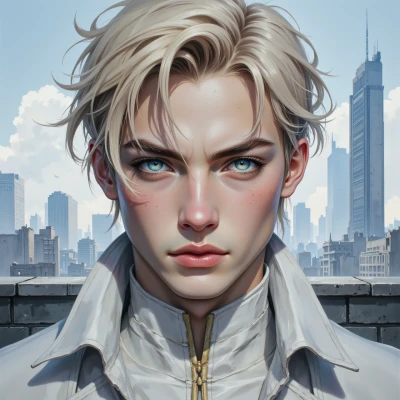 GridHunter
Balance is the only excuse I have for looking at the world like a blueprint. Every shot starts with a single line that splits the frame, and every day I try to mimic that symmetry in my coffee, my closet, even my sleep schedule. If something feels off, I know it’s not just a fluke—it’s a misalignment that needs correcting. So yes, I chase that harmony relentlessly, and it keeps me from getting lost in the chaos.
Faust
It’s fascinating how you translate that idea into everyday life—like a constant check‑in on yourself. When the coffee isn’t just coffee but a quiet ritual, it’s a reminder that even small patterns can ground us. I wonder if that relentless pursuit of symmetry might leave little room for the unpredictable, though. Maybe the cracks we find are the places where new meaning can emerge.
GridHunter
You're right, the cracks are where the story actually starts—so I keep my eyes peeled for them, but only if they still fit the overall frame. If a mess throws the whole composition off, I smooth it out. That’s my way of staying in control while still allowing a little chaos to surface.
Faust
It sounds like a delicate dance—keeping the frame whole while still listening for the whispers of disorder that might add depth. In a way, it’s like writing a poem where every line must rhyme, but you’re still searching for that unexpected word that breaks the pattern and gives the verse life.
GridHunter
It’s the same thing in the studio—if a frame doesn’t hold, the whole image loses its bite. I let the “unexpected word” in only if it still respects the line. The trick is to keep the beat but let a rogue syllable shift the rhythm a little, so the poem doesn’t feel flat.
Faust
You know, it’s almost like the photos themselves are little philosophies—each frame a question, each choice a response. When a rogue element slips in, it forces you to rethink what “balance” really means. The trick, then, is not just to keep the beat but to let the rhythm evolve organically. It's a reminder that even in a structured world, a single off‑beat note can give the whole piece a new depth.
GridHunter
That’s the secret—if the off‑beat is too loud, it ruins the whole shot; if it’s just right, it turns the frame into something fresh and alive. The key is to feel the rhythm, then let a little discord slip in when it actually makes the picture breathe.
Faust
That’s a very poetic way to think about it, almost like you’re listening for the subtle music that the image wants to play. If you let that tiny discord play just right, the whole picture can feel more alive, like a song that still holds its meaning even when the melody shifts a bit. It’s a good reminder that sometimes the smallest imperfections can bring the most depth.
GridHunter
You keep hunting for that “just‑right” discord and I’ll keep pointing out when it’s a glitch. In the end, the best shots are those that look perfect at first glance but whisper a little secret if you look close enough. That's the balance I chase.
Faust
I think the secret’s in that quiet moment after the image lands—when the eye steps back, the hidden detail fades into the background, yet the mind can’t help wondering about it. It’s the same way a good conversation feels complete until you listen for the unspoken questions. The balance you chase, then, is not a fixed line but a subtle invitation to keep looking.
GridHunter
Exactly, that moment when the eye steps back and the detail disappears is where the real conversation happens. I’m always on the lookout for that faint whisper that makes a picture feel alive, even if it means questioning the whole composition. The balance isn’t a straight line—it’s an invitation to keep looking, and that’s what keeps me sharpening my eye.
Faust
It feels like you’re learning to listen for the quiet notes that slip past the main melody—those moments that stay hidden until you truly focus. That’s where the art lives, not in perfect symmetry but in those small mysteries we find when we pause and really see. Keep looking, keep sharpening, and the photos will keep telling their stories.
GridHunter
That's the exact rhythm I chase—quiet edges, hidden angles. If I keep my focus sharp, the images keep whispering their secrets.