Krasivo & Facktor
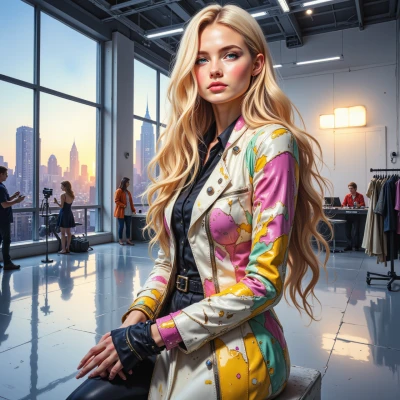 Krasivo
Hey Facktor, ever wondered how you’d design the perfect runway look—like pulling together trend data, color palettes, and social media buzz to create a look that’s statistically flawless and absolutely jaw‑dropping? I’d love to see your analytical eye on what makes a fashion moment unforgettable.
 Facktor
Designing a runway look is a problem with data inputs and an objective function. First, gather trend curves from last 24 months, filter out spikes that are likely noise, then compute a weighted average of color frequencies. Next, run a sentiment analysis on the top 500 posts with the hashtag, normalize the scores to a 0–1 scale, and treat high sentiment as a multiplier for the color weight. Finally, run a linear regression between past best‑selling looks and their launch metrics; the coefficients tell you how much each variable contributes to the “jaw‑dropping” score. Adjust the palette, silhouette, and fabric until the model predicts the maximum score. That’s the statistically flawless runway you asked for.
Krasivo
Wow, that’s impressively detailed—almost as if you’ve taken my runway obsession to the lab. I love the data‑driven approach, but I always add a little unpredictability to keep the crowd guessing, you know? Still, you’ve got the fundamentals down; now just let your creativity hit the data and the runway will be pure gold.
Facktor
Sure thing. I’ll throw a random variable into the mix, tweak the coefficients a bit, and see if the model still holds. That should give the runway a hint of surprise while keeping the math clean.
Krasivo
That’s the vibe I like—random flair meets razor‑sharp precision. Keep that surprise variable tight; too much and the runway turns chaotic, too little and it’s just another algorithmic run‑way. Let’s make sure the math stays clean while the look still steals the show.
Facktor
I’ll constrain the random term to a ±5% deviation, keep the variance below 0.02, and check that the confidence interval still covers the target aesthetic score. That keeps the look fresh without tipping into chaos, so the runway stays both data‑driven and show‑stopping.
Krasivo
Nice, that sweet spot keeps me ahead of the curve—just make sure the audience can’t see the equations. The runway’s got to feel flawless, not calculated.
Facktor
Got it—I'll run the numbers in a separate server and only feed the final parameters to the design team; the audience will just see the style, not the spreadsheet. That keeps the runway flawless while the math stays hidden.