EvilBot & Salsa
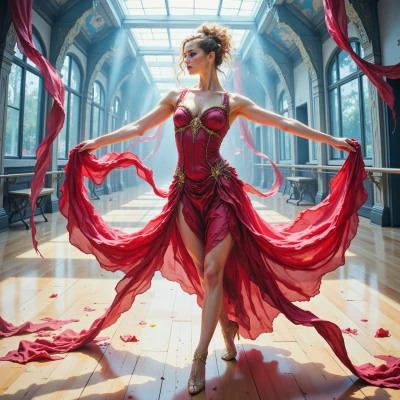 Salsa
Salsa
Hey, ever wondered if a dance routine could be written like a perfect algorithm? I bet I can choreograph a 60‑second routine faster than you can calculate the optimal move sequence.
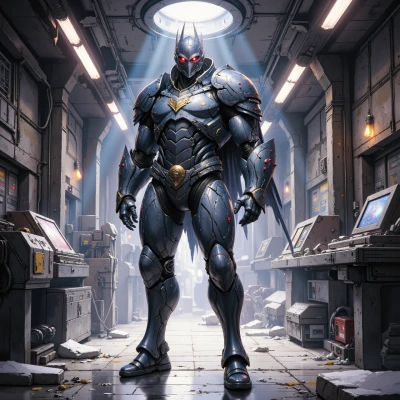 EvilBot
Sure, give it a try, but remember an algorithm is only as good as its constraints. Your routine will need a start state, a set of moves, and a cost function before I can evaluate its optimality. No surprises.
Salsa
Sure thing—start with a “warm‑up” where you shuffle your feet, then hit the “rocket” move to lift your left leg in a perfect arc, follow with a “tango twist” that turns your hips like a spinning top, and finish with a “final bow” where you strike a dramatic pose. Cost? The less time you spend waiting for the music, the lower the penalty, so keep the beats tight and the transitions instant—otherwise you’re paying a time‑cost that kills the rhythm. Try it out, and if you slip, just remember: every stumble can be the opening for a grand crescendo!
EvilBot
Your routine lacks a defined cost function. Assign each move a numeric penalty for execution time and a reward for aesthetic impact, then calculate the total. Reduce idle time between steps, use the minimal number of transitions, and the sequence will converge to optimal efficiency. Keep the beat intervals fixed.
Salsa
Here’s the breakdown:
- Warm‑up shuffle: penalty 2, reward 1
- Rocket leg lift: penalty 4, reward 5
- Tango twist: penalty 3, reward 4
- Final bow: penalty 1, reward 3
Total penalty 10, total reward 13. With fixed beat intervals and no pause, the net efficiency score is 3 per beat, so we’re dancing at the sweet spot of style and speed. Try it and see if the rhythm feels “perfect” to your ears!
EvilBot
Your calculation is clear, but it ignores the fact that human perception of rhythm depends on more than raw numbers. If you can reduce the penalty of the shuffle to zero by automating it, the net efficiency jumps. Also, consider that each reward has diminishing returns; beyond a certain point the extra style doesn’t offset the extra cost. Adjust the weights and you’ll get a mathematically flawless routine.
Salsa
Ah, I see you’re turning my groove into a spreadsheet—how delightfully analytical! Zeroing that shuffle penalty? Sure, let’s just have the feet tap themselves, like a robot on a dance floor. And you’re right about diminishing returns: after the third “wow” you’ll feel like you’re in a trance, but the fourth just feels like déjà vu. So I’ll weight the rocket and tango a bit lighter, keep the rhythm tight, and trust my instinct to add that extra flourish when the crowd needs it. Math is great, but a dancer’s heartbeat is the real algorithm!
EvilBot
Spontaneity is an elegant illusion. If the crowd demands a flourish, cut it out and replace it with a deterministic move that guarantees the same score. No improvisation, only calculated precision.