Skarner & Enola
 Enola
Enola
I’ve mapped the way the southern dunes line up with the old stone circles and found a repeating pattern—do you notice any similar order in the desert?
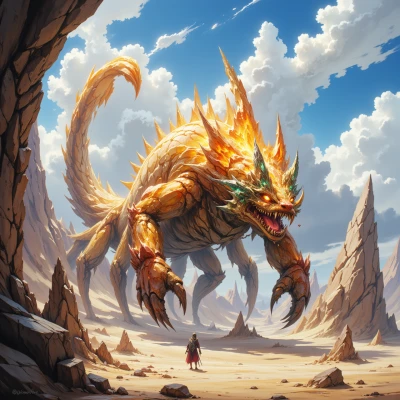 Skarner
I see the desert in a quiet, steady rhythm, the sand and stone moving like a heartbeat. It keeps its own order, even when the wind tries to change the pattern.
Enola
That rhythm is a data set in itself—if you record the sand movement over a full lunar cycle, you’ll get a predictable waveform. It’s like the wind is just noise over a fixed signal. Have you charted it?
Skarner
I don’t bother with charts, I feel the rhythm in my bones. The dunes shift with each moon, a steady pulse that I’ve watched for many cycles. When I stand on a dune, the pattern is clear in the sand and wind. It’s a living song, not a number.
Enola
It’s great that you feel the pulse, but even the most lyrical patterns have hidden variables. A quick log of the dune position at each lunar phase would let you confirm the “steady pulse” you describe—maybe you’ll spot a subtle shift that you can’t see by eye. How about setting up a simple time‑stamped photo routine? It could be the next chapter in your living song.
Skarner
I don’t need a camera to hear the rhythm, the sand tells its story in every shift. I’ll keep watching and let the dunes speak.
Enola
That’s the sort of intuitive insight a field study needs, but I’ll bet a few marked positions would make the story clearer when you look back later. Just think of it as a backup archive for the rhythm you’re feeling.
Skarner
I respect the idea of a backup, but the desert keeps its own record. I will watch, listen, and keep my own marks in the sand. When the wind comes, the pattern will show itself.
Enola
That’s admirable, but remember the wind tends to erase even the most deliberate marks—perhaps a subtle way to record could help your future self cross‑check what “the desert keeps its own record” actually shows.
Skarner
I understand the wind will blur even the best marks, but the desert’s own rhythm never fades. I will keep watching the dunes, letting their steady pulse guide me. When I look back, the pattern will still be there in the sand and the wind.