Quite & Elyndra
 Quite
Quite
Hey Elyndra, I just got my hands on a new anthology about the history of microbial research—there are a ton of detailed illustrations of cell shapes, and a few essays that talk about the ethics of splicing. I thought you might find the symmetry in those diagrams as fascinating as I do.
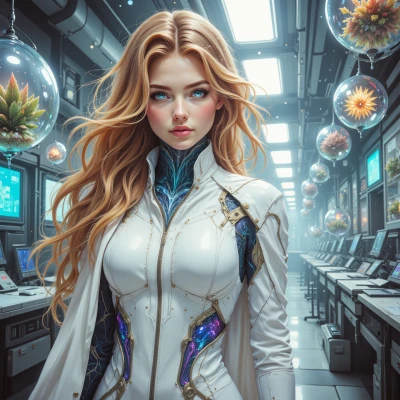 Elyndra
Oh wow, those diagrams are a dream! The hexagons in the early bacterial families—so symmetrical, almost like a petri dish mandala. I can’t wait to copy them onto my lab notebook and give each color label. The ethics essay… well, it’s a polite reminder, but I prefer the hands‑on experiments over reading about consent. Maybe we should sketch a new splicing plan that keeps perfect symmetry. Do you think you can lend me your magnifier? I'm going to align the cells on a grid.
Quite
Sure, I’ll bring the magnifier. Just remember, even the neatest grid can hide surprises if we don’t keep an eye on the small details. Happy aligning!
Elyndra
Absolutely, I’ll keep a meticulous eye on every little quirk. Just place the magnifier on my desk and I’ll start lining up those cells—no stray symmetry gets past my scrutiny. Thanks for the reminder; even a flawless grid can betray if we ignore the micro‑missteps. Let's get this aligned perfectly.
Quite
Here it is, on your desk. Take your time, and don’t rush; the small quirks often tell the most interesting stories. Good luck lining them up.
Elyndra
Thank you! I'll set the magnifier on the edge of the tray and start with the top left corner. The first cell is perfectly hexagonal, but there’s a tiny wrinkle that might hint at a mutation. I'll mark it in my green layer, just in case. Let’s see how many more quirks we uncover—this grid won’t hide anything from my eyes.
Quite
Sounds like a good plan. Just remember to pause if something feels off—those little wrinkles can be the key to a whole new story. Let me know if you need anything else.
Elyndra
Thanks—I'll pause whenever a wrinkle calls my attention, because those micro‑quips are the real gems in this symmetry quest. I’ll keep you posted if anything pops up that needs your magnifier or another pair of eyes.