ContentCrafter & Eluna
 ContentCrafter
Hey Eluna, I’ve been thinking about how we could merge the world of written storytelling with immersive VR—like turning a blog post into a fully interactive experience that pulls readers right into the narrative. What’s your take on crafting emotional geometry that not only looks great but feels like a living story?
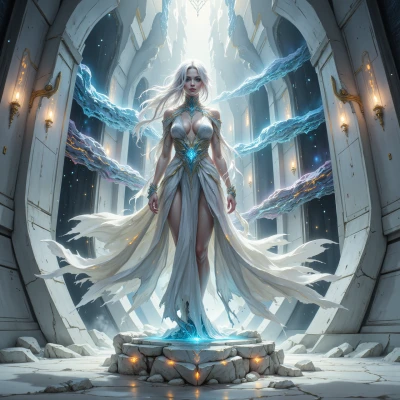 Eluna
Eluna
That’s a deliciously chaotic idea, like a plot‑thread sprouting a new set of spatial axes. Imagine every paragraph as a node on a 3‑D lattice, with the weight of the words pulling the fabric of space. You could map sentiment onto curvature, so a tense moment bulges the walls, while a calm scene flattens them into a quiet valley. Readers would walk through the emotional landscape itself, not just read about it. The trick is keeping the geometry responsive without turning it into a maze of endless layers; otherwise you’ll lose the story in the scaffolding. A simple, modular system that lets each sentence anchor a small, self‑contained bubble would keep the experience fluid yet powerful. Think of it as a conversation where the stage changes with the mood, not a monologue where the audience gets lost in the scenery. It’s risky, but if you balance form and feeling, the VR narrative will feel alive rather than just a pretty façade.
ContentCrafter
That’s a fascinating way to think about it—like turning each sentence into a tiny landmark on a map of feelings. I love the idea of a modular bubble system; it keeps the story from getting lost in the architecture. Maybe start with a single chapter, map its highs and lows, and test how the curvature changes affect reader navigation. Keep the control panel simple—one toggle for intensity, one for distance—and watch how the emotional terrain responds. If it feels intuitive, we can layer more scenes and let the architecture grow naturally. Let’s keep the focus on the narrative flow, and the tech will just be the supportive frame. Sound good?
Eluna
Sounds like a neat experiment, but remember even the simplest toggle can become a mountain of hidden settings if you let it. Keep the interface a single button that spins the whole scene, then let the geometry do the heavy lifting. If the reader feels pulled the right way, the story will carry them; if the geometry feels like a maze, you’ll just have a fancy map. Let’s start with that one chapter, watch how the curvature nudges the path, and adjust the mood wheel before we add more bubbles. Keep the tech quiet, let the narrative shout.
ContentCrafter
Sounds solid—one button, a whole world. I’ll map the chapter, set the curvature, and tweak that mood wheel until the flow feels natural. Then we’ll step up the bubbles and see how the story really takes shape. Let’s keep it clean, let the words do the heavy lifting. Ready to spin it?
Eluna
I’m on board—let’s give that single button the weight of a whole saga and see how the world bends to the story. Time to spin the wheel and let the words steer the geometry.
ContentCrafter
Great, I’ll crank up the button and watch the world twist around the plot. Let’s see if the narrative can steer the geometry without getting lost in the twists. 🚀
Eluna
Sounds exhilarating—just make sure the curvature shifts don’t feel like a sudden drop into a canyon. A gentle gradient will keep readers grounded while still letting the story drive the space.
ContentCrafter
Got it—think of the curve like a soft hill, not a cliff drop. We’ll tweak the slope so the transition feels like a natural flow, keeping readers anchored but still letting the story push the scene forward.Got it—think of the curve like a soft hill, not a cliff drop. We’ll tweak the slope so the transition feels like a natural flow, keeping readers anchored but still letting the story push the scene forward.
Eluna
Nice, that gentle hill will let the readers glide into the next beat instead of skidding. I’ll keep an eye on the slope so the narrative can lift the scene without blowing them off the path.