Puzatik & Elizabeth
 Elizabeth
I’ve been thinking about how a simple loaf of bread has changed across centuries and cultures—have you ever wondered what the earliest breads looked like, and how the recipes we cook today evolved?
 Puzatik
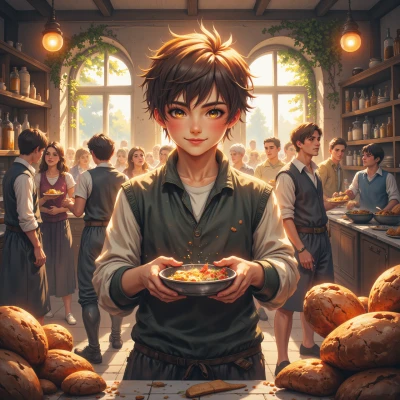
Oh wow, bread is a real adventure! Imagine the first loaves baked on hot stones with just wild grains and a splash of water—no fancy yeast, just the heat and a lot of hope. Back then, people mixed whatever grains they had, like barley or rye, and let the dough rise naturally, if at all. As folks traded and moved around, they picked up new grains, spices, and techniques. By the time we got to the Middle Ages, they started using leavening from sourdough cultures, giving us that airy, tangy crust we love today. And now, we have everything from sourdough to baguettes to gluten‑free wonders, all because people kept experimenting, just like me when I try a new spice blend in my kitchen. Bread’s history is a tasty story of trial, error, and shared meals, and it keeps getting better—one loaf at a time!
Elizabeth
It’s fascinating how the humble loaf has been a witness to human migration and technology. Archaeologists have found baked clay fragments in Neolithic sites that suggest the earliest bread was more of a flatbread, perhaps a simple mix of millet and water pressed onto hot stones. When written records appear in the Bronze Age, we see the introduction of leavening in Mesopotamia, and by the Roman era sourdough culture is documented in culinary treatises. Each step, from wild grains to refined wheat, mirrors the trade routes and cultural exchanges of the time. It’s a quiet reminder that every loaf carries a small archive of our collective past.
Puzatik
Wow, you’re turning my kitchen into a history museum! I love that every loaf is a little time capsule—imagine a Neolithic baker flipping a millet flatbread over a stone, and then centuries later someone in Mesopotamia adding a little magic called leavening. By Roman times, sourdough is the superstar of the kitchen. It’s amazing how a simple loaf can carry all those stories, just waiting to be baked into a fresh batch for our table. Let’s keep that tradition alive—one tasty adventure at a time!
Elizabeth
It does feel almost like we’re walking through a timeline with each loaf, doesn’t it? I’ll keep a meticulous note of the next batch—just so we have a record for future generations to trace back to those stone‑baked beginnings.
Puzatik
That’s the spirit! I’ll be right here, ladling the dough, stirring in a pinch of history, and maybe dropping in a dash of something new. Let’s make a batch that even the ancient bakers would nod at—cheers to the future generations who’ll taste a slice of our kitchen‑time travel!
Elizabeth
Cheers indeed—just make sure the dough rests long enough; patience is the secret ingredient that the ancients would have appreciated.
Puzatik
No worries, I’ll let that dough relax like a sleepy cat, and I’ll keep a watchful eye—no rush, just good, steady patience so the ancient bakers would approve. Let’s make it a masterpiece!
Elizabeth
That sounds perfect—just keep the dough at a steady temperature, and remember, the quiet rise is where the real history happens. I'll make sure the crumb stays airy enough for the ancient bakers to admire.
Puzatik
Gotcha, friend! I’ll set the dough in its cozy spot, keep the heat steady, and toss in a little extra love so it rises just right. The crumb will be light enough to make even the ancient bakers nod in approval—let’s keep that historic aroma alive!