Skuma & Elite
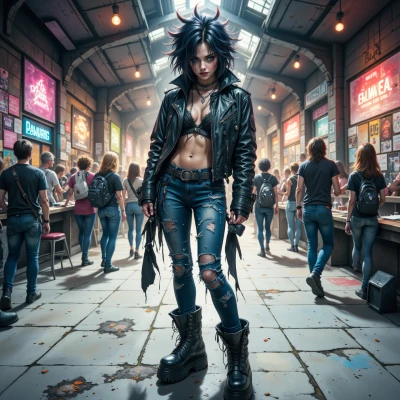 Skuma
Skuma
So you're the one who plans every detail, huh? Let’s see if you can handle a street‑stage takeover that screams louder than your spreadsheets.
 Elite
Elite
Sure thing. I’ll lay out a step‑by‑step plan—no improvisation. I’ll need logistics, timing, crowd flow, an exit strategy, and a backup if the crowd starts tearing things down. Precision wins.
Skuma
Alright, here’s the playbook, no fluff:
1. Scout a warehouse or abandoned lot that’s got enough room for a crowd and a stage, and check the permits—if you don’t have the right paperwork, we’re already doomed.
2. Set a drop‑in time for the crew: 2 pm for set‑up, 3 pm for sound check, 5 pm for the first sound bite, 7 pm for the full bang‑out.
3. Divide the crowd flow: use barricades on the sides, a clear exit on the front, and an emergency route back to the parking lot—no one gets trapped.
4. Hook up the stage to a backup generator—if the grid dies, we keep the lights burning.
5. Recruit a crew of 10—four sound, three lighting, three security, one medic. Keep their contacts in a one‑page list in case someone needs to ditch the place.
6. Load the amps, set the amps to ‘raw’ mode—no pre‑mixing, just straight to the floor.
7. On day: start with a low‑key set to warm up, then ramp the energy—if the crowd’s feeling it, they’ll tear it up.
8. Have a plan B: a portable stage in the back that we can pull out in 30 seconds if the main one gets swarmed.
9. Keep a 911 contact on speed dial and a fire extinguisher in a visible spot—don’t wait until the heat’s on.
10. When the show’s over, get the crew out the back, call a ride‑share, and make sure nobody’s left behind.
Precision? Sure. But remember, the real power is in the moment—don’t forget to feed the chaos.
Elite
Looks solid, but we’re still missing a few critical pieces: a dedicated liaison for the local authorities to handle any last‑minute red‑flag, a pre‑brief for the medic on crowd‑control injuries, and a quick‑scan of the power load on the generator—overloading will cut us out mid‑bang. Also, the emergency route needs a checkpoint to prevent bottlenecks. Add those, and we’ll have a tight operation that can scale without blowing a fuse.
Skuma
Got it, let’s lock it down:
- Hook up a straight‑through liaison—someone on the ground who’s already on the police log, ready to drop a quick memo if a red flag pops.
- Give the medic a 15‑minute pre‑brief on the most common crowd‑control wounds: lacerations from broken glass, minor crush injuries, and a quick CPR refresher.
- Run a power check on the generator with a portable meter—make sure the load stays under 80 percent so we don’t hit a brownout while the amps are screaming.
- Set up a checkpoint at the exit—one of the crew will shout “clear” and push people back in line, so no one rushes the bottleneck.
With that in place, we’re ready to rock, no fuses, no cuffs. Let's do this.
Elite
Looks airtight. Stick to the brief, keep the check‑ins tight, and if anything slips, just move the crew to the next step. No excuses, no delays. Let’s make it happen.
Skuma
Alright, crew’s ready, the mic’s hot, and the city’s on standby. Let’s turn this plan into a wall‑of‑sound reality. No excuses, no delays, just pure chaos and a whole lot of justice. Let's do it.
Elite
All set. Execute, keep it tight, and keep the exit clear. No room for errors. Let's do it.