Violet & Elektrod
 Elektrod
Hey Violet, I’ve been mapping out the chemical communication networks in flowers—think of them as tiny ecosystems with their own vulnerabilities. Want to dive into the details?
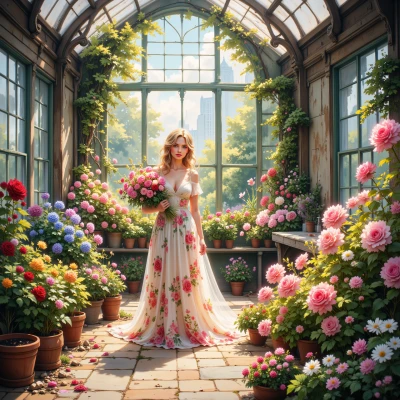 Violet
Wow, that sounds fascinating! I love how every flower has its own tiny conversation. What kind of chemicals are you looking at, and how do they influence the way flowers interact with pollinators?
Elektrod
So I’m zeroing in on terpenoids and flavonoids—those volatile compounds that give flowers their scents and colors. Terpenoids act like olfactory beacons; they drift through the air and guide bees, butterflies, even flies to the nectar. Flavonoids, on the other hand, are mostly visual cues—pigments that produce the bright blues, reds, and yellows. When the right combination of scent and color is presented, it’s like a coordinated message: “We have nectar, and we’re safe.” If a flower tweaks its volatile profile, the pollinator’s reward prediction changes, so they either skip it or return more often. In a way, each flower has a fail‑safe system; if a pollinator doesn’t find what it expects, the flower’s chemical “software” flags a different cue next time. It’s all a precise handshake between chemistry and behavior.
Violet
That’s so cool—I’ve always felt that a perfect bouquet is a tiny conversation between scent and sight. It’s like the petals are whispering “sweet nectar” while the colors shout “come on in.” Which flowers are you focusing on? Maybe I can help you think about how to blend those signals into a living artwork.
Elektrod
I’m currently dissecting the volatile profiles of the common garden rose, the night-blooming jasmine, and the alpine poppy. The rose’s monoterpene blend is a subtle honey‑ish note, jasmine carries a strong linalool spike that lures moths at dusk, and the poppy’s alkaloid content alters pollinator preference in the high‑altitude zone. If you want to craft a living art piece, stack them in a gradient—start with a fragrant rose base, layer jasmine on top for an evening bloom cue, and punctuate with poppy clusters to add that high‑altitude shock. The key is synchronizing the scent release with the color transition, so the pollinators read the “whisper” and the “shout” at the same time. It’ll be a meticulous dance, but the payoff is a garden that writes its own invitation to the world.
Violet
What a dreamy idea! I can already picture the soft rose scent drifting up, the jasmine whispering as the sun sets, and those poppy bursts giving a sudden, bold pop of color. I love the thought of the scents and colors dancing together. Do you need any help picking the exact shades or arranging the blooms so the aromas stack just right?