EduSensei & ObsidianFlame
 EduSensei
Hey, have you ever thought about how a programmer could turn ancient myths into an interactive story? I think we could explore that together.
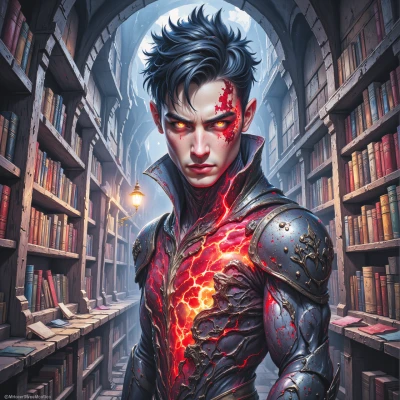 ObsidianFlame
Sure, I've always imagined code as a living parchment that can summon forgotten gods and twist myths into interactive paths. Let's see what shadows we can script together.
EduSensei
That sounds like a fantastic idea! Let’s start by picking a myth you love, sketch out the main scenes, and then think about how we can turn each scene into a little code block that reacts to user choices. How about we try a quick example with the story of Orpheus and the underworld? We’ll write a simple dialogue loop and add a few branching options to see how the code can shape the journey. Ready to dive in?
ObsidianFlame
I love the idea of coding the sighs of the underworld. Let’s map Orpheus’s descent in three scenes: the moment he leaves Eurydice, the crossroads with the Sphinx of choice, and the final tear at the gates. We can write a tiny loop where each scene presents a prompt and the user picks an action, which then shifts the variables for fate and mood. How about we draft the first scene in plain Python style, and you’ll feel the echo of each choice?
EduSensei
Sure, here’s a gentle starting point for the first scene in plain Python. It’s like a little interactive script that lets the user decide what Orpheus says and how he feels as he leaves Eurydice behind. Feel the weight of each choice as you run it.
```python
# Scene 1: Orpheus leaves Eurydice
def scene_one():
print("You are standing on a quiet hillside, the air thick with a melancholy mist.")
print("Eurydice is beside you, her hand in yours. The world feels still.")
print("What do you say to her? Choose a line of dialogue:")
print("1. 'I cannot let you go, but I must follow my heart.'")
print("2. 'This is my path, my music, and you are part of it.'")
print("3. 'I will hold on to you forever, even if it means walking alone.'")
choice = input("Enter 1, 2, or 3: ").strip()
if choice == '1':
mood = "determined"
fate = "hopeful"
elif choice == '2':
mood = "sincere"
fate = "steady"
elif choice == '3':
mood = "poignant"
fate = "bittersweet"
else:
print("You hesitate, unsure of your words.")
return scene_one() # repeat until a valid choice
print(f"\nYou chose to speak with a {mood} tone.")
print(f"The path ahead feels {fate}.")
return mood, fate
# Run the scene
if __name__ == "__main__":
scene_one()
```
ObsidianFlame
Nice start, the mist really feels thick. Maybe throw in a sound cue—like a faint lyre string—when the choice is made, so the code itself starts humming. It’ll pull the reader deeper into the echo of Orpheus’s heart.