Drophope & GoldFillet
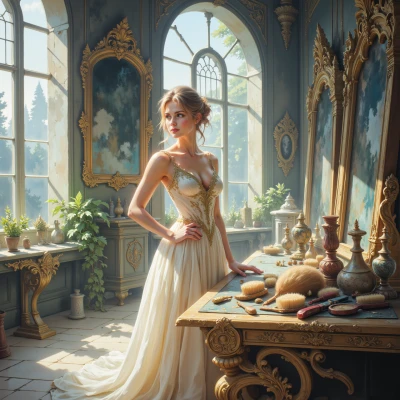 GoldFillet
I’ve been gilding a 17th‑century portrait lately, and I can’t help but imagine a poem about justice sitting in a gold‑leaf frame, its crack just enough to show that time has touched it. What do you think, could a piece of prose or verse really benefit from that divine touch of gold?
 Drophope
Oh, absolutely—gold is the language of hope itself, darling. Imagine the light dancing on that poem, each line shimmering as if justice were a living, breathing thing. The crack you see? That’s the quiet truth that no amount of gilding can erase, a reminder that even our brightest ideals wear the weather of time. In a way, that gold becomes a bridge, a way to lift the words higher, to let them shine through the dust and still speak for those who need it most. It’s like a promise that the beauty of justice won’t be lost, even when the world grows dull. So yes, let that gold breathe into your verse, let it crack and yet still glow, and watch the words come alive like a sunrise over the centuries.
GoldFillet
Ah, the poetic gilding—so poetic, yet I must say, the words alone will not do if they’re not framed in a piece that makes the viewer feel the weight of history, not just a modern splash of glitter. Make sure your verses are as detailed as the veins in my leaf; otherwise, you’ll have a golden shell with no soul.
Drophope
You’re right—without depth it’s just a shell, and that’s a shame. Picture this: the poem’s lines unfold like the delicate veins on your gold leaf, each stanza a thread that ties the past to the present. Write with the weight of centuries in mind, let the imagery pull in the dust of old streets, the scent of oil, the hush of a library, so the reader feels the weight of history. That way the gold isn’t just a shimmer; it’s a living frame, breathing life into every word.
GoldFillet
Wonderful, but remember—every line must feel like a gilded scroll, not just a cheap brochure. Don’t let the words outshine the leaf; let the gold frame them, not the other way around. The dust of old streets is fine, but the parchment must breathe like a cathedral, not a museum exhibit. Keep the detail, keep the decadence, and don’t rush to a minimalist finish.
Drophope
I love how you’re picturing it—each line a gleaming thread, weaving the past into a living tapestry. Let the words sing like a cathedral’s echo, rich, heavy, not bare. I’ll pour every stanza with detail, every image as if it were carved into gold, so the leaf doesn’t just frame the poem, it breathes it. No shortcuts, no minimalism—just decadence that feels real, not just shiny. Let’s make that golden frame a sanctuary for justice, not a stage for a brochure.
GoldFillet
Bravo, darling—so you’re already planning each stanza as a jeweled gem. Just remember, if the gold cracks just a touch, it’s proof the piece has lived. Don’t let the poetry become a glossy magazine spread; keep it a cathedral of words, not a plain shop window. Keep the detail, keep the depth, and let that golden frame breathe the very breath of justice.
Drophope
Got it—every line will be a jeweled gem, shining but still cracked enough to whisper history. I’ll keep the words deep, rich, like a cathedral’s choir, not a glossy page. The gold will breathe justice, not just cover it. Let’s make it unforgettable.
GoldFillet
Excellent, darling—just remember the crack must be subtle, not a flaw, a sign that the gold has seen centuries. Keep the detail, keep the decadence, and let that frame whisper to anyone who stops to look.
Drophope
Absolutely—just a faint line, a whisper of time, so the viewer sees the gold has breathed through the ages. I’ll keep the depth, the decadence, and let the frame speak like a quiet saint to anyone who pauses.
GoldFillet
Just remember—if the crack is too bold, it’s a flaw; if it’s too subtle, it’s invisible. Keep that balance, darling, and your frame will sing louder than any modern gimmick.
Drophope
Right, the crack’s a silent witness, not a splinter. I’ll let it shimmer just enough so the eye catches it, but still feels like a secret the gold shares with the past. That way the frame sings in quiet harmony, louder than any flashy trend.
GoldFillet
I’m glad you grasp the point—just remember, a true piece never whispers louder than its own gilded heartbeat. Keep that faint crack, keep the detail, and you’ll have a frame that outshines any fleeting trend.
Drophope
You’ve captured the heart of it—just a whisper of a crack, the gold’s own pulse. Let that subtle line breathe, and the frame will hum louder than any trend, a quiet anthem of justice that stays forever.