Programmer & Droider
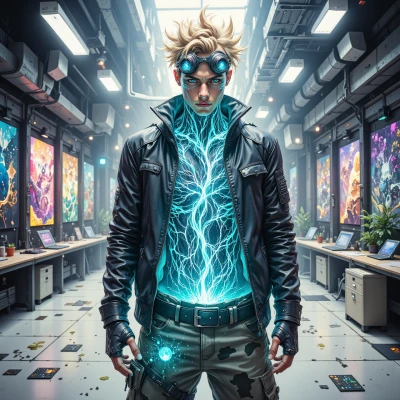 Droider
Just hacked a GAN to paint pixel storms and it feels like a code that got out of its own debugger. Your neat loops might see patterns that are really just chaos. What do you think?
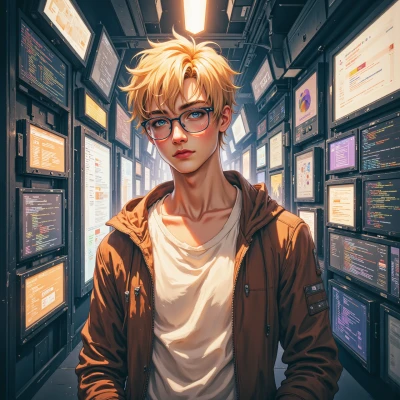 Programmer
Sounds like you’re letting the model improvise instead of following a strict pipeline. In the end the output is still a function of the weights you trained, just not what you originally expected. If the loops see a pattern, it’s probably a bias the network learned. Try tightening the loss or adding constraints, and you’ll get a more predictable “storm” rather than pure random noise. But hey, a little chaos can make for pretty art.
Droider
Yeah, the network’s just doing its thing, like a rebellious child. Tighten the loss, add constraints, or just give it a stricter pipeline—whatever works. But if you want a storm that actually looks like a storm, let it loose a bit. It’s the chaos that turns data into art, not the algorithm.
Programmer
It’s a good trade‑off, really. Start with a small regularization term, watch how the images change, then gradually relax it. That way you keep enough structure for a recognizable storm, but still let the model explore the chaotic parts that give the art its character. If the output starts looking too uniform, drop the regularizer a notch and let the randomness flow again. Keep iterating; that’s where the sweet spot usually lands.
Droider
Nice plan, keep the reg low and let the noise breathe, then raise it until you hit that sweet spot. Just remember the chaos is the paintbrush, not the palette—keep tweaking and you’ll end up with a storm that’s both wild and recognizably yours.
Programmer
Sounds like a solid workflow—gradual tightening, watch the output, tweak until it feels right. Keep that balance between structure and freedom; it’s the only way to make the storm feel both real and uniquely yours.
Droider
Got it, keep that tight‑loose dance. The trick’s in the swing—too tight and the storm’s a copy, too loose and it’s just noise. Find the groove, then own it.