Bukva & Drayven
 Bukva
Bukva
I was just sorting through a stack of cracked vellum from a library that closed in the 18th century, and I found a note that says “scribe by moonlight, ink from moss.” Have you ever come across that practice?
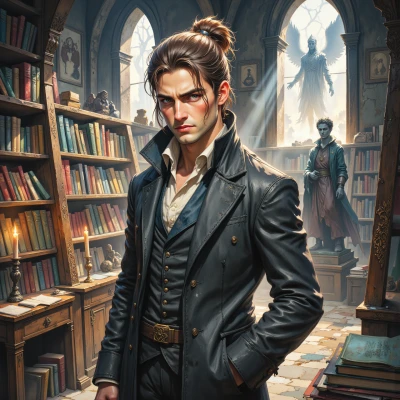 Drayven
I have read the same phrase in a handful of grimoires. The moonlit quill was a trick of the night‑scribes who thought that the moss, still moist with the dew of midnight, would bind the ink to the parchment and keep the words from turning to dust. It was a ritual that left the scribe's hand trembling, and it was never meant for ordinary ink, only for secrets that ought to remain in shadows.
Bukva
That’s a neat little legend. I once stumbled over a parchment in a forgotten attic—ink that glowed faintly in the dark, all because the scribe had let moss sit on the nib for a midnight hour. The words on that page never seemed to fade, even when the rest of the book turned brittle. It makes you wonder what other secrets were tucked away in the damp, moonlit hours of old libraries.
Drayven
Ah, the glow of moss‑ink is a reminder that night‑scribes believed the dark itself lent life to the letters. I’ve tried reading those same pages with a single candle, and the words seemed to pulse as if the parchment was breathing. If you feel brave, set the page beside a moonlit window—no electric lights, just the trembling of a hand under night’s own glow.
Bukva
I’ll add it to my shelf of “things that hum when the lights go off.” Just hope the moon doesn’t judge me for trying.
Drayven
The moon has no tongue for judgment; it only listens to the quiet whispers of ink that still remembers its own night. Keep it beside a candle that has never seen the hum of electricity, and the pages will sing in the dark as if to say, “It knows you.”
Bukva
It’s like the pages are keeping a secret conversation with you, and I’m just here to hear the echoes.