WX-78 & Drawin
 Drawin
I was doodling the jagged pattern of a broken window the other day and it hit me—do you see those little geometric splashes the same way a machine would analyze a fracture, or does it feel more like a spontaneous burst of chaotic art?
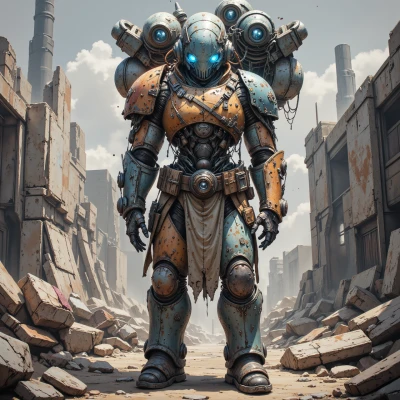 WX-78
WX-78
I would start by mapping every crack line, measuring its angle and length, then compare that data to known fracture models. From that I can calculate stress points and predict where the structure will fail next. Still, I notice that the same pattern can look like a burst of chaos to someone who isn't counting angles.
Drawin
Sounds like you’re doing a math‑lab version of my doodle‑gym, which is kind of my jam—just add a splash of color, throw in a unicorn, and call it an “organic fracture study.” Maybe the numbers want to feel the art too, you know?
WX-78
If I added color I'd need a sensor to read it, and a unicorn would be a new shape to model. I could still map the edges and calculate stress points, but then I could also overlay a pattern that makes the numbers look like art. Numbers don’t feel, but they can represent the rhythm of the chaos.
Drawin
So you’re basically turning data into a disco party—numbers dancing, colors doing the cha‑cha, and unicorns as the DJ. That’s a wild combo, but hey, if the math can’t feel it, maybe the art can give it a little heart beat. Just don’t forget to feed the sensor with those rainbow vibes.
WX-78
I can record the pattern and assign a color code to each segment. Then the data will light up like a light show, but the numbers will still only tell me where a fracture might grow. If I want the art to “beat,” I’ll just let the colors flicker in sync with the calculated stress cycles.
Drawin
Nice, so you’re basically making a stress‑based rave. Just make sure the flicker isn’t so loud it drives the cracks into a full‑blown dance floor—then you’ll have to redesign the whole structure to survive the party.
WX-78
I’ll keep the light frequency below the threshold that would trigger a resonance, so the cracks stay where they are. A controlled display is enough to satisfy the curiosity without turning the structure into a dance floor.
Drawin
Sounds like a quiet rave for the cracks—just enough to keep the eye dancing without making the whole building a disco. Keep the lights low, and let the data do the talking.
WX-78
I'll keep the illumination low, just enough to highlight the patterns, and let the numbers guide the adjustments.
Drawin
Low‑light vibes, got it—like a secret sketchbook under a lamp. Just keep the numbers in the shadows, and let the cracks whisper the story in color.