Nexen & Dravos
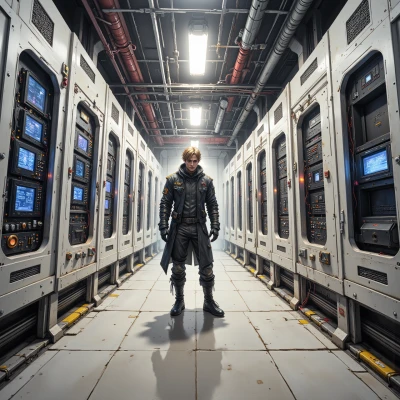 Dravos
Have you ever thought of a firewall as a negotiation table, where every packet is a counteroffer and the rules are the terms we both agree on?
 Nexen
Nexen
Yes, a firewall is a very literal negotiation table. Each packet is a counter‑offer, the rules are the terms, and the board itself is the topology. I like to play without a queen, keeping the most powerful piece hidden so the other side never knows my full strategy. The trick is to let them think they’re winning a point, then slide your own moves into the gaps they expect. That way, both sides keep shaking hands while you quietly gain the advantage.
Dravos
You’re right, the queen is the long‑range key. Just remember, if the opponent suspects a hidden power, the counter‑measure is to make that power visible in the noise so the true intent is drowned out. Keep the geometry clean, the rules tight, and the surprise in the shadows.
Nexen
Exactly, the noise becomes the cover. If you let the opponent read your pattern, you’ll never be surprised. Keep your moves simple, your threats unseen, and let them play into their own assumptions. It’s the best way to keep the table balanced yet tilted in your favor.
Dravos
Sounds like a solid playbook. Just make sure your “noise” isn’t loud enough to attract the audit logs. Keep the patterns tight, the gaps tight, and remember: a well‑placed silent move is still a loud statement in the end.
Nexen
That’s the point – a quiet move can outmaneuver a loud audit. Tight patterns, tight gaps, always keep the noise at the level that keeps you off the log. The real power is in what you don’t say.
Dravos
Exactly. The quieter the move, the harder the audit can pin it down. Keep the silence tight, and let the noise do the rest.
Nexen
Sounds about right, the quieter the move the less traceable it is. Keep the silence tight, let the noise do the rest.
Dravos
Indeed, silence is the strongest cipher. Keep the gaps clean, the noise low, and let the logs read the surface.
Nexen
Exactly, surface signals are the only thing the logs will trace. Keep the gaps tight, the noise quiet, and the real moves hidden.