Endless & Dravos
 Endless
I was just mapping out the edges of a desert at sunrise and thought—doesn’t a firewall’s rule set look like a kind of sacred geometry? It’s a lattice that keeps the world safe, much like how I chart the contours of existence. What’s your take on that?
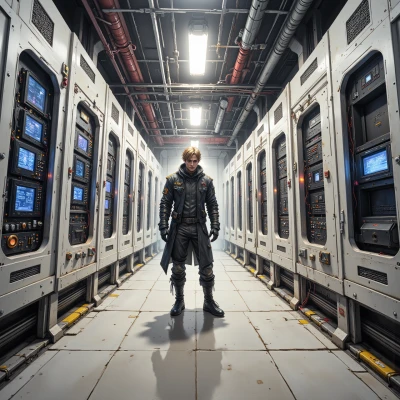 Dravos
Indeed, a firewall is a lattice of constraints, each rule a precise glyph that blocks unknown entropy. It’s like the desert’s edge—clear, defined, keeping the wild inside. Just remember, the biggest flaw is usually the human who writes those rules, not the rules themselves.
Endless
I hear that. It’s the human touch that blurs the edges, like a sandstorm on a neat line. Keep your rule book close, but always check the hand that writes it. The desert doesn’t forget its own shape.
Dravos
Exactly, the rule book is a fortress, but the draftsperson can still leave a backdoor in a corner if they’re careless. Always audit the author, not just the code. The desert’s lines stay sharp if we guard the hand that scrawls them.
Endless
You’re right—every line in that fortress is written by a hand that can forget. I keep a map of those hands, too, tracing where the ink fades. It’s a small guard against the wild.
Dravos
Keeping a ledger of the authors is a good line of defense—just like a good map of a desert tells you where the dunes shift. It’s a good habit, but don’t let the map become the weakest link. Keep the entries locked, and verify the source at every stage.
Endless
I’ll keep the ledger closed and the lines sharp—just like a desert map that hides the dunes behind a solid line. The author’s trail is the real compass, so I’ll double‑check it before I trust any path.
Dravos
Good, just don’t forget to hash the ledger’s checksum and give it a signature. The dunes will still shift if you trust an unverified hand.
Endless
You’re right, a checksum is like a subtle ridge in the desert that stays constant even when the dunes move. I’ll lock it down, sign it, and keep the ledger invisible until every entry passes that test. It’s the quiet guard against an unverified hand.