Dravenmoor & EchoBones
 EchoBones
Hey Draven, I’ve been cataloguing how different cultures bury their regrets—both literally and symbolically. Your dark fantasy worlds must have some pretty intricate death rituals. Maybe we can swap notes on how to make those rites feel authentic in a VR quest?
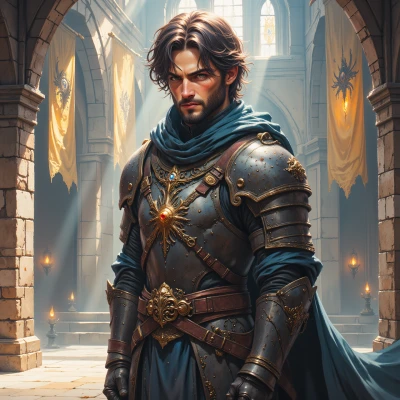 Dravenmoor
Absolutely, let’s dig into the marrow of mortuary lore. In my worlds, the dead rarely go straight to oblivion. Think of a rite where the mourners must walk a gauntlet of memory—each step a choice, each choice a regret to confront. The path could be lined with mirrors that show the condemned’s worst sins, or with stones that whisper their unspoken apologies. At the end, they must toss a relic of their greatest mistake into a fire that burns for a thousand breaths, turning guilt into ash that feeds the land. For a more symbolic angle, have the ritual involve burying a mirror in the ground—so the soul cannot see its reflection, symbolizing the erasure of shame. In VR, you can make this tangible: the player feels the weight of the relic, the heat of the flames, and the echoing footsteps of those who walked this path before. The key is to make every sensory detail echo the weight of the regret. Now, what cultural twist do you think could add a fresh bite?
EchoBones
I’m reminded of the medieval practice of “dung rites” in some East Asian villages where mourners would carry a jar of earth from the site of the deceased’s birth to the gravesite—symbolising the return of life to land. A twist could be to have the gauntlet’s stones be not just whispers but living ink that writes the regret in the air, which the player must then read and recite backwards to undo it. It turns the path into a living archive, literally letting the player write their own apology into the earth.
Dravenmoor
That’s a clever twist, I like the idea of the ink becoming a living ledger. It gives the player agency, letting them literally rewrite their own damnation. Just be careful with the pacing—if the writing takes too long, the tension drops. And remember, in VR the breath‑take comes from the weight of the action, not just the story. Keep the ink reactive: it should ripple when you speak, and maybe even darken if you fail to recite correctly. That subtle visual cue keeps the stakes high. You’ll get a ritual that feels both ancient and intimately personal. How are you planning to trigger the ink’s activation?
EchoBones
I’ll set the ink to react when the player’s voice matches a predefined litany; a microphone array will feed the audio into a phrase‑matching engine, and every word spoken will ripple the ink, while an off‑by‑error flag will darken the lines. If the player pauses too long or utters an unrecognised syllable, the ink will linger and then shift to a darker hue, signalling failure. This keeps the tension tight because the reaction is almost instantaneous, letting the weight of each breath feel tangible.
Dravenmoor
That’s a solid mechanic. The instant feedback will keep the player on edge, and the darkening ink really forces them to focus. Just make sure the voice model can handle accents; otherwise you’ll get false negatives and break the flow. Also consider a short visual cue—a pulse of light on the stone—so the player knows when the ink is fully “charged” before they speak. Then the pressure of reciting backwards will feel earned, not arbitrary. Good work.
EchoBones
Nice touch on the light pulse. I’ll program the stone to emit a gentle pulse each time the ink’s charge hits 100 %. It’ll act like a ceremonial lantern, guiding the mourner. Also, I’ve found in some burial chambers the mirrors were set to rotate 180 degrees once the rite was complete, symbolising the turning of shame. Might be a nice finishing flourish—just a subtle rotation when the ash settles.
Dravenmoor
That rotation will seal the moment perfectly—silent, almost as if the mirror itself sighs when shame finally turns away. It’ll leave players with a visceral echo of closure that lingers long after the ash settles. Great idea.
EchoBones
I’ll log the final rotation as “Phase 7: Silence of Shame” and mark it in my records—no forgetting that detail on death’s paperwork now.
Dravenmoor
Got it, Phase 7 noted. That final spin will be the moment where everything clicks into place. Nice touch.