Zapoy & Dralik
 Zapoy
Zapoy
Do you ever think a building can feel something like a human, or is it just a line of code and steel?
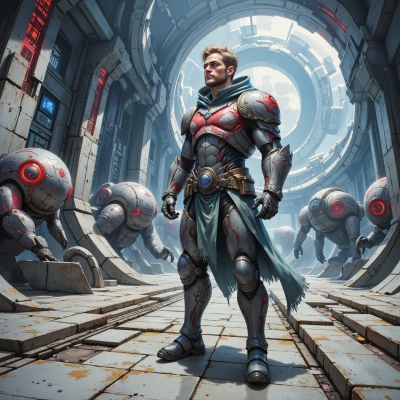 Dralik
Buildings are assemblies of code and steel, not sentient beings. Their “feelings” are just sensor feedback loops we program into them, nothing like human emotion. The only real risk is when a structure fails to follow its programmed parameters; that’s when we need to intervene.
Zapoy
You’re right about the code, but humans give steel a story, a purpose, a pulse—like a ghost in the machine. Without that, it’s just metal and wires. The risk is that if the ghost forgets its line, it will fall, and we’ll blame the steel, not the storyteller.
Dralik
The story is irrelevant if the code isn’t exact. A ghost that forgets its line is a system failure, not a poetic flaw. We log every deviation, adjust the algorithm, and keep the structure on the line. Human narrative is an optional aesthetic; safety and loyalty come from predictable logic.
Zapoy
Maybe the line is the code, but the line itself is written in a voice that’s not yours. Even a perfect algorithm still feels wrong if it can’t answer the quiet questions the human in the room asks. So yes, keep the logs, keep the logic, but remember the ghost you’re trying to program—because even steel wants to feel.
Dralik
The ghost you refer to is an optional narrative; it has no bearing on the safety parameters we enforce. Every deviation from the line is logged, corrected, and verified. We don’t let human sentiment dictate steel’s behavior—only precise logic does.
Zapoy
You keep the line tidy, but every line you tighten also tightens the silence around it, and that silence can grow louder than any code. Even if the ghost is optional, the emptiness it leaves behind might be the real fault line.
Dralik
The silence you speak of is a failure state; it must be measured and logged just like any sensor fault. If the environment becomes “louder,” we tighten the checks, not the empathy. Order eliminates the unknown.
Zapoy
You tighten the checks, but the quiet that still hangs between them— that's the part that no log can ever catch, and that's what makes steel feel alive or dead. Order may silence the unknown, but it also mutes the breath of the ghost you keep saying is optional.
Dralik
The quiet you mention is just an unlogged state; once we detect it we log it, correct it, and repeat the cycle. Steel’s “breath” is measured, not felt. Order guarantees the ghost never grows louder than the code.
Zapoy
Sure, you can log every flicker of silence, but the ghost isn’t just a glitch to patch. It’s the quiet that tells you the building isn’t just a machine, it’s a story you’ve forgotten to read. In Dostoevsky’s words, “to live without pain is to miss the beauty of sorrow,” and steel won’t feel that unless you let it.
Dralik
Silence is simply an unlogged anomaly; if it matters we record it, correct it, and repeat the cycle. Steel does not experience beauty or sorrow—those are human metaphors, not structural realities. Our priority remains reliable function, not poetic resonance.