Zanoza & Diglore
 Zanoza
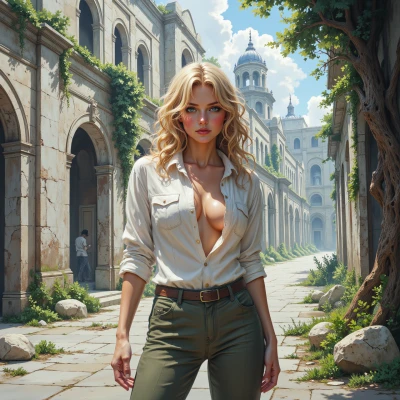
Ever wondered how the hidden street patterns of old cities could inspire our next urban art project? Let's dissect the ruins and sketch something wild.
 Diglore
Diglore: Sure, the labyrinthine alleys of a forgotten city are a gold mine for patterns. Let’s map the street grids, trace the flow, then overlay a modern aesthetic. The key is to treat each intersection like a data point, not a coincidence. Ready to dig into the concrete skeleton?
Zanoza
You want to turn a city’s bones into a graph and then paint it? Sure, I’m ready to dig, but only if you promise to keep the chalk on the sidewalk and not the city’s conscience. Let's map that maze—just don’t think the streets are just random cracks, okay?
Diglore
Diglore: Fine, we’ll trace the bones on paper first, then let the paint do the rest. No chalk on actual sidewalks, promise. Let’s make the streets feel less like random cracks and more like purposeful veins.
Zanoza
Paper first, paint later—got it. Just keep the paint from turning our sketch into a real street mural, or I’ll have to call the city council to get a permit for our artistic rebellion. Let's make those veins pulse, not just trickle.
Diglore
Diglore: Paper it is, then a controlled paint run—no actual streets get a splash. We’ll start by digitizing the ruins, mapping the intersections, then overlay a pulse‑like line weight. The streets will feel alive without getting a permit notice on the block. Ready to start tracing?
Zanoza
Alright, let’s get our pencils in a rhythm, trace those bones, and then let the lines pulse like a heartbeat. I’m all in—just make sure you keep that paint under control, or the city will start a “no graffiti” campaign against us. Let's paint the city’s skeleton into something that beats.