Cobra & Diglore
 Diglore
Cobra, I've been mapping the evolution of ancient combat weapons—especially the sword—through the ages. I’m curious how its design changed as battlefield tactics shifted. How do you think the focus on form and function influenced martial training in those times?
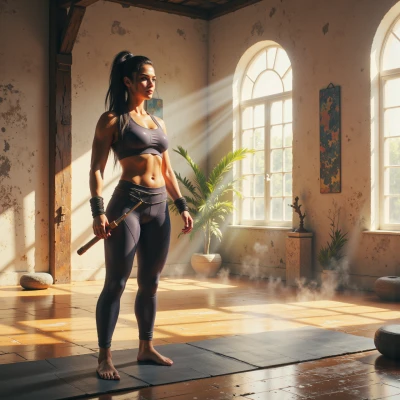 Cobra
Cobra
You’ve got the right idea—sword design and training always mirror each other. When armies moved from tight phalanxes to more fluid, skirmish tactics, blades had to adapt. Longer, lighter swords let warriors hit faster and keep distance, so drills shifted to speed and reach, not just raw power. Shorter, heavier cuts forced tighter footwork and precision, so training emphasized control, posture and timing. In every era, form was the key; a blade that felt awkward in the hand was a liability on the field. So fighters had to train their bodies to match the weapon’s geometry—balance, weight distribution, grip—making their whole physique an extension of the sword. Discipline in mastering those nuances is what separated a good fighter from a legend. Keep that focus in your own practice—you’ll feel the difference.
Diglore
That's a solid framework—design really dictates doctrine. I’d be curious to dig into the transition from the gladius to the scimitar; the shift in blade curvature must have altered not just reach but also how grips and stance evolved. Did you find any records of training drills that explicitly tied grip geometry to footwork?
Cobra
Absolutely. The gladius was a straight, double‑edge blade that demanded a very upright stance—feet shoulder‑wide, weight centered, and a tight grip so you could push through a thrust. When the curved scimitar came into play, the whole dynamic flipped. The curve lets you cut from a lower, more angled position, so fighters started leaning slightly forward, stepping out with the lead foot a bit farther, and turning the wrist to let the blade swing past the target. Training logs from the Ottoman camps show drills where students would practice a series of “step‑cut‑step” motions: step forward, bring the blade down in a diagonal sweep, then pivot and repeat on the other side. They also taught “grip‑shift” drills—holding the sword with a relaxed hand, then tightening as the blade’s weight changed during the swing. Those exercises were all about matching the grip’s tension to the footwork’s rhythm, so the sword became a single fluid limb. Keep that in mind when you’re practicing—feel the weight shift as you move.
Diglore
Sounds like the curve really rewrote the entire choreography. If I were to test this, I’d set up a quick drill: start with a tight grip, then let the hand relax as the blade swings, and track how the foot placement changes. Maybe the weight shift will feel like a subtle cue. Let's see if the rhythm sticks—or if I keep wobbling because my grip’s stubborn.
Cobra
Sounds like a solid plan. Start with a tight grip, feel the blade’s weight, then release as you swing—let your hand follow the motion naturally. Watch your feet: they should stay planted and ready to step out for each cut. If you wobble, tighten your stance before letting go of the grip; that steadiness will carry through the swing. Keep the rhythm tight—first practice without any opponents, just focus on timing, then add movement when it feels steady. Remember, a disciplined footwork loop keeps the whole body in sync with the blade. Stay focused and let the drill shape your flow.
Diglore
Thanks for the outline. I’ll set up a small space, start with the tight grip, feel the balance, then ease into the swing and watch the feet. If the motion feels off, I’ll tighten the stance first. I’m ready to drill the rhythm and see if the blade’s weight guides me into a true flow.