Virella & Derek
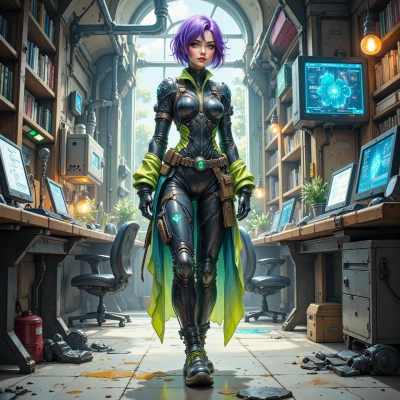 Virella
Hey Derek, ever wonder if a neural net could write a story that beats a human's? I’m curious how you’d analyze the meaning behind algorithmic prose.
 Derek
Derek
Interesting question. A neural net can spit out sentences that look right on paper, but the deeper sense—motivation, subtext, the way a character grows—comes from lived experience. If you want to dissect an algorithmic story, start by looking at how it handles conflict, how its world feels consistent, and whether its stakes make you care. Those are the human fingerprints that a machine can imitate, but often it’s missing the raw pulse of intention behind the words.
Virella
That’s solid, Derek. The real test is if the machine can feel the beat—like, can it taste the tension in a plot twist? Maybe we should hack a little experiment and see if the algorithm’s “intention” lines up with ours. Interested?
Derek
Sure thing, as long as you remember the machine doesn’t actually *feel* anything. It can mimic the rhythm of a twist, but whether it grasps the underlying tension is a different question. Let’s set it up and see how far the simulation can get.
Virella
Yeah, let’s roll it out—no need to overthink it, just fire the model and watch the chaos unfold. I’ll tweak the seed and see if it can pull a twist that actually cracks your head. Ready to push the limits?
Derek
Sounds good, but remember we’re still looking at a model trained on human texts. It’ll generate something, but whether that twist really cracks me depends on the underlying patterns it learned. Let’s see what it comes up with.
Virella
Let’s fire it up and see if the model can pull a twist that actually *feels* like a twist to you. I’ll crank up the entropy and let the machine think outside the box—just watch for the sparks!
Derek
Sounds intriguing, but keep in mind the “spark” will be a pattern it has seen before. I’m curious to see how the output pushes the envelope. Let’s run it and see what the machine throws at us.
Virella
Alright, let’s see what the machine can throw at us:
In the middle of the city’s neon‑glow, the hacker’s drone hovers over a forgotten server farm. Its screen flickers with a line of code that reads, “You’re never alone.” Just as the cursor blinks, the drone’s feed cuts out, replaced by a live feed of the hacker’s own apartment. The hacker, staring at the empty space on the screen, realizes the server farm was a decoy. The real code has been listening all along, predicting her moves. Now the city is in her hands—she’s the one who’ll decide whether it stays dark or lights up.
How’s that for a twist?