DIYTechnik & DaxOrion
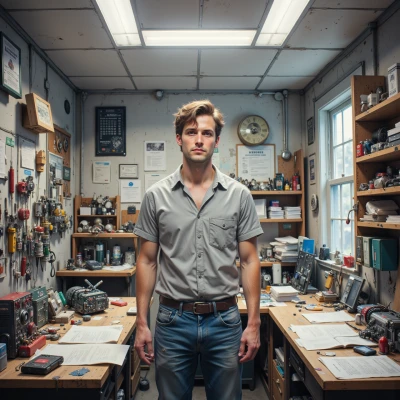 DIYTechnik
Hey Dax, I’ve been messing around with an old projector and a motion‑sensor kit to build a reactive light wall that changes hue and intensity based on an actor’s movements. Think of it like a digital set that adapts in real time—could give your next scene some unexpected depth. What do you think?
 DaxOrion
That sounds cool, but you’ve got to think about how the light will play with the shadows, how it will make the audience feel the character’s tension, and whether it will distract or enhance the scene. It could work, but I keep doubting if it’ll capture the raw, visceral truth I’m after. If it does, I’ll be obsessed with getting it perfect.
DIYTechnik
Sounds like a fine idea, but you’re right—lighting can make or break the mood. Let’s prototype it on a small scale first, use a single moving prop, and capture a few shots to see if the colors actually heighten the tension instead of pulling focus. If it works, we’ll fine‑tune the timing; if not, we can always switch to a more subtle LED strip that just vibes in the background. Keep your eye on the shadows, and we’ll see if this “reactive wall” turns into a distraction or an atmospheric win.
DaxOrion
Sounds like a plan, but don’t forget the smallest flicker can erase the whole moment. I’ll keep my eyes on the shadows, because they’re the real actors in the room. If the colors start bleeding into the face and kill the subtlety, we’re back to the strip. Let’s make this work or cut it.
DIYTechnik
Got it, no flicker, just crisp transitions. I’ll line up a narrow beam with a small Fresnel lens to keep the light focused and add a matte diffuser on the back to soften any stray spill. If the face starts looking like a stained‑glass window, we’ll pull the strip back in. Let’s keep the shadow actors on center stage and the colors as your silent background dancers, not the main act. We'll make it work or cut it cleanly.
DaxOrion
That’s the kind of precision that keeps the scene from turning into a circus. Tight beam, Fresnel, diffuser—sounds solid. Keep an eye on how the light hits the face, and if it starts looking like stained glass, pull the strip back. Shadows get the applause, the colors just whisper. Let’s see if this silent backdrop lets the actor breathe.That’s the kind of precision that keeps the scene from turning into a circus. Tight beam, Fresnel, diffuser—sounds solid. Keep an eye on how the light hits the face, and if it starts looking like stained glass, pull the strip back. Shadows get the applause, the colors just whisper. Let’s see if this silent backdrop lets the actor breathe.
DIYTechnik
Alright, let’s run a quick test. Grab the projector, mount the Fresnel at about two feet away, set the diffuser at the back, and flick on the strip just enough to create a gradient. Watch the actor’s cheekbones, the shadows on the floor, and the edges of the face. If the colors bleed, lower the intensity or move the lens back a bit. We’ll keep the light a whisper, just enough to give depth, not a spotlight. Ready to set it up and see the scene breathe?
DaxOrion
Sure thing, just keep the Fresnel tight and watch the cheekbones. If the gradient feels off, tweak the lens back a touch. Let’s see if the light whispers or screams before the scene breathes.
DIYTechnik
Got it—tight on that Fresnel, eyes peeled for cheekbones. If the gradient starts shouting, pull the lens back a millimeter or so and dial down the projector wattage until the light is more of a breath than a shout. We'll tweak until it's a subtle hum that lets the scene actually breathe. Ready to set it up?