Cuprum & Daughter
 Daughter
I’ve been thinking about how the tiniest detail can change the whole story—like when you shape a metal piece. How do you decide which imperfections to keep and which to smooth out?
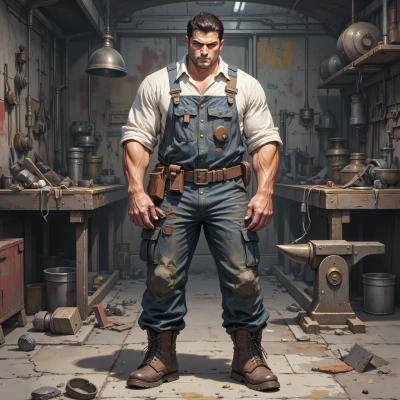 Cuprum
I look at each flaw like a flaw in a tool—if it weakens the piece or hides a mistake I smooth it out; if it adds character I keep it, because a good craft has personality, but I never settle for anything less than perfect.
Daughter
That’s a really clear way to look at it. I sometimes wonder if the perfect piece is the one that feels the most alive, or if the little flaws are the ones that make it interesting. What makes you decide when a flaw is worth keeping?
Cuprum
I keep a flaw only if it tells a story the metal can’t otherwise convey; if it doesn’t compromise strength or function, it’s a detail that makes the piece feel honest and alive. Otherwise I smooth it away.
Daughter
That balance sounds like the kind of careful honesty a writer tries for in a story—keep the parts that give depth, but not when they hurt the whole. It’s like choosing which scenes stay in the draft and which get cut for the sake of pace. Do you ever feel the pull to keep a flaw just because it’s there?
Cuprum
I never keep a flaw just because it’s there. I judge whether it adds value or just makes the piece weaker or harder to use. If it gives depth without hurting function, I let it stay; otherwise I smooth it out.
Daughter
That sounds like a good rule of thumb—keep what matters, cut what doesn’t. It’s a lot like revising a story; the most interesting parts stay, the rest get trimmed. How do you decide if a flaw “gives depth”?
Cuprum
I test it—if the flaw forces me to think deeper about how the piece will be used or how it feels in hand, then it’s worth keeping. If it just makes the metal look rough without adding meaning, I smooth it out.