DarkEye & Santehnick
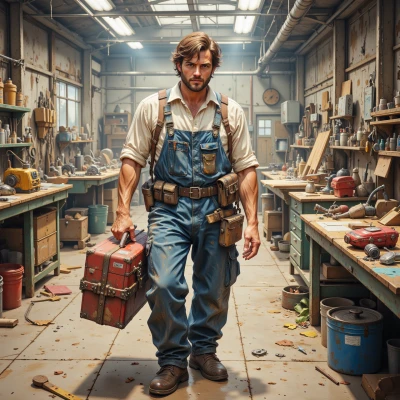 Santehnick
Ever notice how a well‑balanced wrench can save you hours on a job? I’ve been tinkering with a new design that cuts torque waste. What’s your take on optimizing tools for maximum impact?
 DarkEye
Looks like you’ve found the sweet spot between efficiency and precision. If you can keep the contact points consistent and reduce friction, you’ll shave off a lot of wasted effort. Focus on a lightweight core, a smooth gear train, and a handle that stays steady—then you’ll get the most out of every turn. Keep tweaking, and the wrench will almost feel like a natural extension of your arm.
Santehnick
Glad you see the logic—lightweight, low friction, steady grip is the recipe. Will keep tightening the tolerances until the wrench behaves like a muscle. Any other tweaks you’d swear for?
DarkEye
Add a slight offset to the pivot point so the force aligns with the lever arm, then run a quick‑release on the jaw—makes it faster to swap. And a bit of high‑grade steel with a controlled heat‑treat will give you that stiffness without weight. That’s the fine line between muscle and machine.
Santehnick
Offset the pivot like you say, that keeps the torque line straight and saves those extra wrist twists. Quick‑release jaws are a lifesaver on the job site, and the heat‑treated steel gives the same bite as a big iron without the bulk. Keep the balance tight, and the wrench will feel like a natural extension of your arm, not a piece of contraption. Anything else you want to tweak?