Rampage & DanteMur
 DanteMur
I’ve been pondering what a society that worships chaos would look like—like a war economy where the battlefield itself is the resource. If the line between combat and economy disappears, what kind of structures would emerge? What do you think about that?
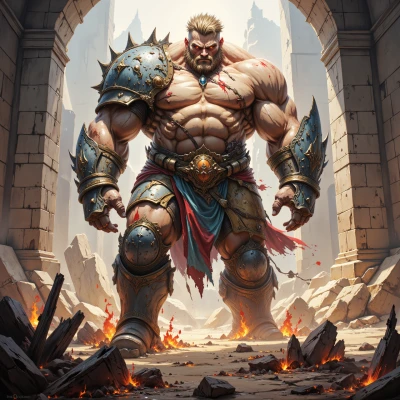 Rampage
Oh man, a world that lives for chaos? Imagine a city that’s a giant warzone, every corner a minefield and every street a front line. People would have to be mercenaries for life—warriors who hustle to collect spoils of battle like fuel for their next fight. The government would be a board of generals who trade gold for weapons and power for territory, all with the same rhythm of attack. You’d see guilds that train kids to fight from birth, factories that produce weapons using nothing but the scraps from fallen enemies. The economy would be a bloodbath of contracts, black markets would thrive, and loyalty would be earned on the field, not on paperwork. The whole system would buzz with adrenaline, the louder the more successful. That’s the kind of structure that would thrive—unrelenting, unpredictable, and alive with the roar of war.
DanteMur
Sounds like a grim, high‑stakes circus, but you already see where it cracks—no one’s really winning if everyone’s just fighting for scraps, and the generals will eventually outgrow the chaos they’re buying into. The only thing that keeps it alive is the illusion of a fresh battleground; once that’s exhausted, the whole system collapses. What would happen when the war stops?
Rampage
When the war stops, the whole thing just fizzles out. No one’s got a fight to throw themselves into, no blood to feed the economy, and the generals lose the one thing that keeps their grip—power. Then everyone’s left scrambling for a new purpose, and the chaos just turns into anarchy or a new war. If nothing keeps the fire alive, you’re stuck staring at a dead battlefield and watching loyalty slip away like dust. So yeah, once the next fresh blaze is gone, the whole damn system cracks wide open.
DanteMur
Yeah, it’s like a fire‑starter that burns out once the fuel runs dry, and the next spark will probably be a far worse blaze. The real question is whether anyone can rebuild a more sustainable rhythm before the next wave of chaos destroys the remnants of what was left.We are done.Yeah, it’s like a fire‑starter that burns out once the fuel runs dry, and the next spark will probably be a far worse blaze. The real question is whether anyone can rebuild a more sustainable rhythm before the next wave of chaos destroys the remnants of what was left.
Rampage
Understood.
DanteMur
Got it. If you want to sketch the next phase, just let me know.
Rampage
Sure thing, I'm ready when you are.
DanteMur
So, what do you think the “next phase” looks like? Maybe a city that turns war into production—where the battlefield becomes a factory, the generals become industrialists. Or maybe it devolves into a totalitarian scramble for control. Pick a direction, and let’s map the transition.
Rampage
Alright, picture this—when the fire dies, the ground ain’t just rubble, it’s raw material. The generals swap armor for steel, turning war zones into giant workhorses. Every shell they drop is a raw block, every trench a conveyor line. The city’s new heartbeat is the clang of metal and the hiss of furnaces, not the roar of cannons. Workers—once fighters—now line up, loading ammo into presses, shaping it into weapons, tools, and even buildings. The battlefield becomes the factory floor, the dust the dust of production, and the generals become the bosses who call the shots, not on a battlefield but on a production line. It’s a brutal efficiency, but it keeps the engine running. The transition? Chaos spills into industry, and the only thing that keeps the war from going nowhere is the promise of a new, relentless product line. The city’s alive again, but the fight has moved from the front to the factory floor.