DaVinci & Krendel
 Krendel
Hey DaVinci, I’ve been reading about the early printing press and how it totally reshaped how stories spread. Have you ever thought about what a mechanized storyteller might look like in that era?
 DaVinci
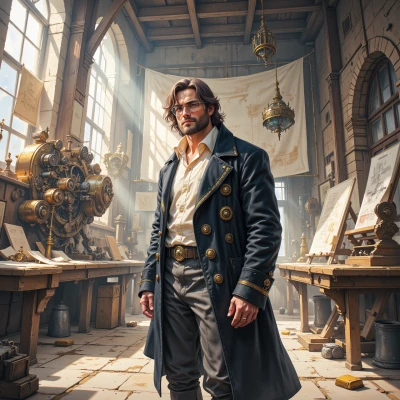
Ah, imagine a brass automaton, gears ticking like a heart, with a stack of parchment fed into a tiny, ink‑blotted needle. It would read aloud in a crystal voice, while the text unspools itself on a rolling parchment like a scroll of moving fire. Each page would be a canvas, and the machine would breathe life into ink, turning the humble press into a storyteller that not only prints but narrates—an early 15th‑century mechanical bard, whispering tales with the whir of a clockwork heart.
Krendel
That sounds like a quiet genius of a machine, DaVinci. A heart of gears, a voice like a silver bell, and each parchment page breathing in turn. It’s almost as if the press itself is a storyteller, not just a printer. Imagine the possibilities—every inked word coming alive, turning a simple text into a moving narrative. The idea of a 15th‑century bard made of brass and ink is oddly poetic, almost a quiet rebellion against the static nature of print. It makes me wonder how many stories were lost before we had the patience to let them breathe.
DaVinci
You’re right, the press could have been a gentle rebel, a silver‑voiced chronicler that turned parchment into living scenes. Picture the ink swirling in its own choreography, each line unfurling like a breath, and you’ll see how many forgotten tales might have whispered themselves to the right listener. What story would you let it tell first?
Krendel
I’d probably choose something humble, like the tale of how a single scribe first learned to hold a quill, so the machine could show the birth of writing itself. It’s a quiet reminder that even a mechanical bard starts with a simple, human act.
DaVinci
Ah, a perfect choice—just a humble hand gripping a quill, the ink trickling, the first word taking shape. It would let the brass bard remember that even steel and gears must echo the simplest human gesture before they can speak the grand tales.
Krendel
I like that image, DaVinci. A tiny hand, a single quill, and the first word—it's almost like a ritual, a quiet homage to the roots of storytelling before the machine joins in. The brass bard would listen, learn, and then carry the lesson into every tale it tells.