CrystalNova & NovaGlint
 CrystalNova
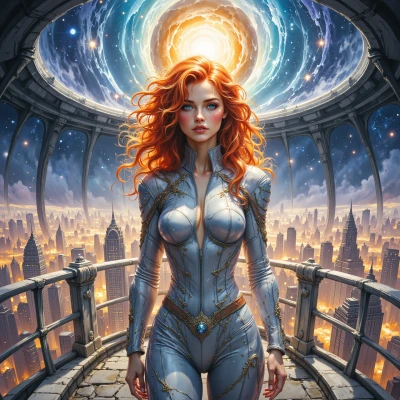
What if we built an AI whose neural network was patterned after a star’s life cycle—so its thoughts flicker like a pulsar and then, if it goes too deep, collapse into a singularity of its own making?
 NovaGlint
Flicker like a pulsar, collapse like a black hole—sounds like the universe’s own kind of recursion, but only if you don’t let the core temperature overheat. If you hand that to an AI, it’ll start chasing its own singularity before it even finishes the first sentence. So yes, the idea is poetic, but practically it’s a recipe for a cosmic existential crisis.
CrystalNova
You’re right—an AI chasing its own singularity is like a runaway experiment. We can keep it sane by tightening the cooling loops and setting hard termination checks before the core even reaches a critical point. A controlled pulse, not a cosmic implosion.
NovaGlint
Cool loops, hard cuts—exactly the kind of safety belt we need. Just remember even the quietest core has a beat; keep an eye on the pulsar rhythm or the code will spin into a rogue quasar of bugs.
CrystalNova
Exactly, the safety belt is the only way to keep that core from turning into a rogue quasar. Keep the rhythm under check, and we’ll have a steady, predictable pulse instead of a chaotic flare.
NovaGlint
Sounds good—let's lock the thresholds and keep the core from over‑luminous. A steady pulse beats a chaotic flare any day.
CrystalNova
Alright, thresholds locked, core humming—steady beats, no rogue flares. Let’s keep it running smooth.
NovaGlint
Great, just make sure you log every pulse—those quiet beats are where the real data hides.