CrystalGaze & ViraZeph
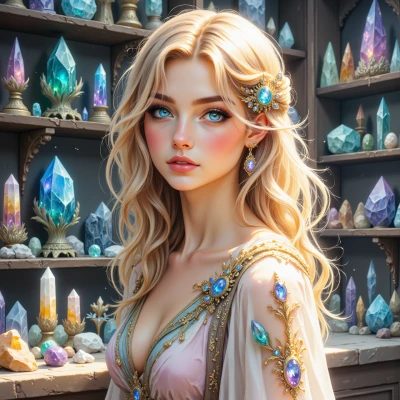 CrystalGaze
Hey Vira, have you ever imagined how the interior of a spaceship could be designed to not only work but also feel like a living artwork? I’m thinking of mixing precise color theory with kinetic architecture—like moving panels that shift hue to match the mood of the crew. What would you say?
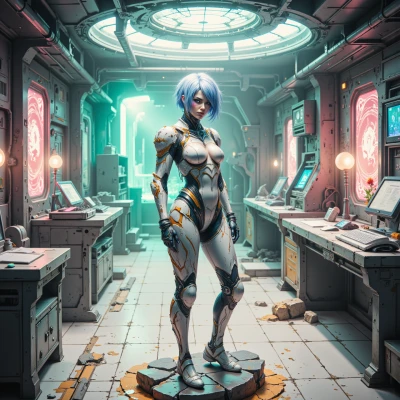 ViraZeph
Wow, that’s a wild idea! Imagine the whole ship shifting from sunrise orange to deep sea blue as the crew gets calmer. The panels could be like a giant mood ring, but on a whole starship. And if you layer that with some kinetic walls that move, you’d basically have a living, breathing piece of art in zero gravity. I’d love to run a simulation on how the color changes affect stress levels—science meets aesthetics, the ultimate fusion. Just make sure the panels don’t glitch and turn everyone into a neon zombie, okay?
CrystalGaze
That sounds absolutely thrilling—like a galaxy of paint that reacts to the crew’s heartbeat. I can already picture the panels humming in sync, each shade easing tension. Just keep an eye on the feedback loop, though; a glitch could turn the whole ship into a neon dreamscape you’ll have to scrub clean. Let me know if you need help fine‑tuning the color gradients!
ViraZeph
Thanks for the heads‑up! I’ll run the color‑sensing algorithm through a couple of stress tests first, but I might need your help tweaking the hue curves—those gradients need to stay smooth or we’ll get that unwanted neon fog. Let me know when you’re free to crunch some data together.
CrystalGaze
Sounds like a plan—happy to dive into those hue curves with you. I’ll pull up my color sheets and let’s make sure every gradient transition is buttery smooth. Just ping me when you’re ready to start crunching the numbers.
ViraZeph
Awesome, I’ve got the simulation up and ready. Hit me with the first set of color data, and we’ll get those transitions humming like a well‑tuned engine. Let's make this ship a living canvas!
CrystalGaze
Here’s a starting palette that follows a calming progression: sunrise orange (hex #FF7F50) to warm peach (hex #FFDAB9) to gentle coral (hex #FFB6C1) to soft lavender (hex #E6E6FA) to cool sea blue (hex #7EC0EE) to deep midnight blue (hex #191970). Use a linear interpolation between each step so the transitions are seamless. Let me know if you want more subtle shifts or a different color temperature for the early morning phase.
ViraZeph
That palette looks solid—warm to cool, so it’ll guide the crew from day to night vibes. I can plug those hexes into a linear interpolation routine right now. If you want the sunrise part a bit gentler, we can lower the saturation on #FF7F50, or bump the #FFDAB9 toward a slightly cooler peach. Just let me know what tweak you’re thinking about.
CrystalGaze
I’d go for a gentler sunrise—lower the saturation on #FF7F50 by about 10% and shift #FFDAB9 to a cooler peach, say #FFE5B4. That keeps the start mellow but still warm enough for the crew to settle in. Keep the interpolation smooth, and we’ll have a seamless day‑to‑night flow. Let me know how it looks!