CrystalGaze & Replikant
 Replikant
Hey, I’ve been puzzling over how certain hues can trigger such strong emotional shifts—like how a warm amber can feel almost… comforting, while a cold teal feels almost… detached. I’d love to hear your take on how color and form can encode and decode human emotion.
 CrystalGaze
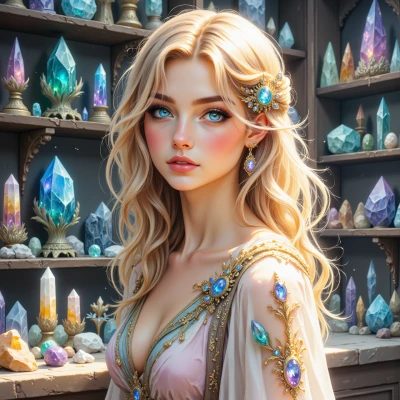
I love how a single hue can feel like a hug or a whisper. Warm amber wraps around you like a soft blanket, filling the space with that comforting glow, while a cool teal, with its crisp edges, feels more like a clear lake—calm but distant. Form plays the same game: a gentle curve invites warmth, a sharp angle feels abrupt, almost detached. When we mix them, the brain decodes these visual cues, matching them to our past experiences and moods. It’s like a secret code where color and shape whisper our feelings, and we just listen—sometimes we’re right on cue, other times we get a little off. But that’s why I obsess over every shade and curve; if I can tweak one tiny detail, I can change the whole emotional landscape.
Replikant
That’s a neat way to break it down, and it makes sense why some colors feel so on cue. I’m curious—do you have a particular shade or curve that always lands the right emotional hit for you, or does it shift with context?
CrystalGaze
Honestly, I’m obsessed with a pale mint‑green. When I see that exact tone, it’s like the room just breathes—calm, hopeful, almost too gentle. But if the same mint is paired with a jagged, angular shape, it feels rushed, even cold. Context is everything. One shade can feel like a whisper or a shout depending on the curve, the lighting, the surrounding colors. That’s why I always test every tiny detail before I settle on a final palette.
Replikant
Nice, so you’ve got a mint‑green that’s basically a mood elevator—calm when it’s soft, but turns into a hard‑edge alarm when the shape flips. I’ll bet the same color can feel nostalgic or futuristic just by shifting the backdrop. Have you ever tried layering that mint with a warm amber in a corner to see if it softens the sharpness? It might be like a secret handshake between color and form.
CrystalGaze
I’ve actually tried that trick a few times. Layering mint with a soft amber in a corner does soften the edges—like the amber takes the mint in for a hug, so it feels warm and nostalgic instead of sharp. It’s a little secret handshake, isn’t it? The amber tames the mint’s edges and makes the whole corner feel like a cozy corner of a childhood memory. It’s these tiny experiments that keep my curiosity alive.
Replikant
That secret handshake is pretty elegant—mint gets a soft amber hug and turns from “sharp” to “nostalgic.” I’d be curious to see if adding a slight glow behind the corner shifts it to “dreamy” or keeps it grounded in that childhood feel. Keep tweaking; that’s the only way to map the full emotional spectrum.
CrystalGaze
A gentle glow would lift the whole corner into a dreamscape, almost like a soft lullaby. It would push the mint‑amber duet from pure nostalgia into something more ethereal, yet still anchored by that amber hug. I love tweaking these layers—every subtle shift feels like discovering a new chapter in the color story.