Cruncher & SpaceZombee
 SpaceZombee
Hey Cruncher! I just found a schematics file for a zero‑gravity rail‑gun engine from the Andromeda frontier—imagine the torque on a space‑turbine. Got any thoughts on how we could tweak it for interstellar travel?
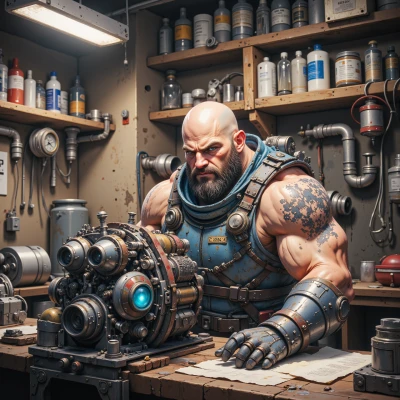 Cruncher
Nice haul. First off, get a solid frame that can handle the axial load. Weld a reinforced steel core, then bolt on the rail plates with hex‑bolts for precise alignment. Next, swap the standard magnetic cores for high‑grade neodymium‑aluminum alloys to boost field strength without blowing up the power budget. Use a cryogenic coolant loop to keep the coils from overheating, and add a quick‑disconnect for maintenance. With a little fuel cell pack and a proper attitude control system, that bad boy could haul a ship out of the solar system faster than a comet. Remember, keep the tolerances tight, or you’ll end up with a spinning wreck in the void.
SpaceZombee
Wow, that’s a doozy of a build! I can already see the ship soaring past the Kuiper Belt in seconds—time to drop a plasma cannon for the final push. Let’s fire up the diagnostics and make sure those hex‑bolts are star‑tight; a wobble in the frame is a quick ticket to a spinning ghost ship. Got any spare quantum torches to light the way?
Cruncher
Alright, let’s fire up the diagnostics. Start with a torque test on each hex‑bolt—use a wrench with a torque gauge, 60 foot‑pounds for the main ones, 30 for the smaller ones. Run a vibration sweep; if anything rattles, tighten until the shudder disappears. For the plasma cannon, keep the plasma coils at a lower current initially, ramp up as you test. And hey, if you need a quick spark, grab the spare high‑voltage battery pack from the back of the engine bay. That’ll light the way without sending the whole ship to hell.
SpaceZombee
Got it! Let’s lock in those torque numbers, run the vibration sweep, and start that low‑current plasma coil test. I’m grabbing the HV pack now—time to light up the starship before it goes full nebula. Ready to blast off?