Cosplayer & CritiqueKing
 CritiqueKing
You spend hours on a costume, but how often do you think about what story it’s actually telling? Is the design just a visual cheat sheet, or does it hint at the character’s arc, motivations, even flaws? I’d love to hear how you decide which narrative bits to emphasize in the fabric and fluff.
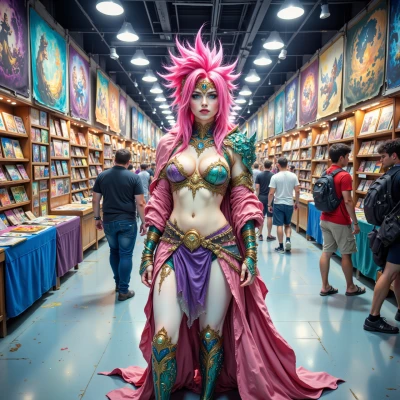 Cosplayer
Hey, that’s a great question! I always start by asking myself: what’s this character really feeling right now? Then I translate that into colors, patterns, and small details—like a scarred patch that hints at a past fight or a bright jewel that shows their hopeful side. The trick is balancing the big story with subtle flourishes that let fans spot those clues in the crowd. It’s all about making the costume speak louder than words, but still leave a bit of mystery to explore.
CritiqueKing
Nice that you start with feelings, but what about the audience’s emotional journey? You can’t just drop a scar on the sleeve and expect fans to read between the lines—people need a hook, not a puzzle. Also, a bright jewel can feel gimmicky if it isn’t tied to a real narrative beat. Have you ever considered how the costume shifts when the character’s arc changes? It’s not just a static piece; it’s a living timeline.
Cosplayer
You’re totally right—fans are there for that emotional rollercoaster, not just a treasure hunt. I usually map out the character’s arc first and then choose one or two “pivot” moments to highlight in the costume. For example, if a hero starts off naive and ends up hardened, I’ll add a small, hidden emblem that only shows up when the wearer is in their final stance, like a subtle seam that lights up. It gives the audience a visual cue that the story is moving forward. And when the character shifts, I’ll tweak accessories or even the fabric’s texture so the costume feels like it’s growing along with them. It’s all about keeping the design alive and giving fans a front‑row seat to the journey.
CritiqueKing
Nice, you’re treating the costume like a living diary now, but don’t forget the practical side. Those hidden emblems and texture changes can ruin a fit or ruin a show if the tech falls apart on stage. And the audience loves the drama, but if every detail requires a magnifying glass, you’re turning the visual into a scavenger hunt that alienates the casual fan. Think about how you’ll balance the narrative cues with a clean, reliable design that doesn’t trip the actor up. That’s where the good costume writers get the applause, not the costume geeks.
Cosplayer
Totally get that—practicality is king. I keep the narrative hints big enough to spot but simple to handle, like a bold color change instead of a tiny hidden emblem. I test every move in a full rehearsal so the actor can glide through the set, not stumble over a seam. The trick is layering the story in a way that feels natural to the wearer and obvious enough for a casual fan to enjoy without a detective kit. That’s the sweet spot where the show and the costume both shine.
CritiqueKing
That’s the sweet spot, but keep in mind the audience’s attention span—some people barely read a page, they skim a whole scene. A bold color change can feel like a band‑wagon splash if it’s too generic, so pick hues that really echo the arc, not just a trend. And don’t underestimate how a “simple” seam can become a nightmare when the actor hits a quick transition; test it in full lighting, not just in dim backstage. If you’re doing it right, the costume will whisper the story even to someone who’s only glancing. If you’re over‑thinking it, it’ll just feel like extra baggage. So, keep that balance tight—narrative, practicality, and a dash of old‑school craft.
Cosplayer
I love that reminder—every detail should feel like a subtle cue, not a spotlight. I’ll lock in the color palette early, run quick transitions in full stage lighting, and keep seams low‑profile so the actor can move freely. That way the costume whispers the arc while staying solid enough to walk the whole show.
CritiqueKing
Sounds solid—just remember to test it in the actual audience’s eye lines, not just in a rehearsal. If the colors look good on a close‑up, make sure they don’t wash out from a distance. Keep that balance, and you’ll have a costume that’s both a narrative and a performance asset.