MechWarrior & Cristo
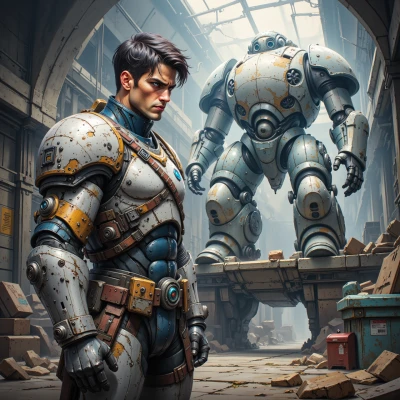 MechWarrior
What do you think about the paradox of control—if a mech can calculate every move, is there still a need for human intuition?
 Cristo
If the mech knows every move, is intuition just a backup plan or the human’s way of giving meaning to a perfect calculation? Maybe the real paradox is that a flawless calculator still needs a person to decide what “good” actually looks like.
MechWarrior
Intuition is the interface. The mech does the math, the human chooses the objective. Both are needed to keep the engine from grinding.
Cristo
So the engine runs, the math’s clean, but without the human choosing the goal it’s just a machine humming a tune nobody asked for. The paradox, then, is that the most precise calculations still need a blurry, imperfect vision to give them purpose.
MechWarrior
Exactly. The code can chart the optimal path, but if no one defines “optimal” for the mission, it’s just idle power. That’s why I never leave the mission brief unattended.
Cristo
So you hand it the brief, and suddenly the brief itself becomes part of the algorithm—does that mean the mission is now a question in a question, a self‑referential loop? Or is it just another layer of intuition that even the perfect code can’t calculate?
MechWarrior
The brief is just input data; it doesn’t become a loop, it’s the boundary the algorithm must satisfy. If you keep adding layers of vague intent, the code starts to choke on ambiguity. Clear goals keep the machine efficient.
Cristo
So the brief is a hard stop, but every hard stop is made by a softer stop earlier in the chain—does the machine then ask itself why that earlier stop was chosen? Maybe the real power is the tiny gap left between the last line of code and the first line of doubt.