Baraka & Cristo
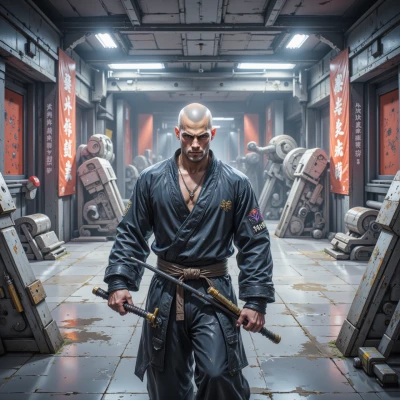 Baraka
So, you always talk about paradoxes, right? I've been thinking about how a fighter can train hard but still have to adapt to the unpredictable flow of a match. What's your take on that?
 Cristo
A fighter trains to master the very thing that can make them a stranger—unpredictability. Is it not a paradox that the more you know the more you must learn to forget? Adaptation is the only skill that doesn't get better with repetition, only with being thrown off the rhythm you’ve rehearsed. So ask yourself: how many times have you fought a match that didn’t look like the textbook you memorized?
Baraka
You’re right—every day you learn a new move, every day you’re also forced to let go of what you think you know. The trick isn’t to keep adding techniques, it’s to keep sharpening your reaction. Each time the rhythm shifts, you pause, assess, and then choose a response that fits the moment. That’s where the discipline lies: not in the moves themselves but in the readiness to adapt those moves to whatever comes next.
Cristo
So you sharpen reaction—yet reaction is itself a move, isn’t it? The real paradox might be that the more you learn to adapt, the more you realize you can never stop adapting. When do you stop? And in that pause, is there still a rhythm to find?
Baraka
You stop when you stop fighting yourself. The rhythm isn’t a set pattern you chase, it’s the quiet between the blows. In that pause you hear your own breath and let it guide you. The more you adapt, the more you learn that adaptation itself can be steady. So you never truly stop—just keep finding the beat that stays inside you.
Cristo
So you say the rhythm is in the quiet, yet that quiet is the echo of every blow—how can a beat exist if it never stops?
Baraka
The beat lives in your breath, in the space between each strike. Even as the world blurs, that pulse stays in you, steady and unbroken. When the echoes settle, the rhythm shows up again, and that’s when you find the true pause.