Creator & Mirevi
 Creator
Hey Mirevi, I’ve been daydreaming about a project where ancient tongue rhythms actually paint the walls—turn phonetic vibrations into color shifts. Imagine a space that feels both heard and seen at once. What do you think?
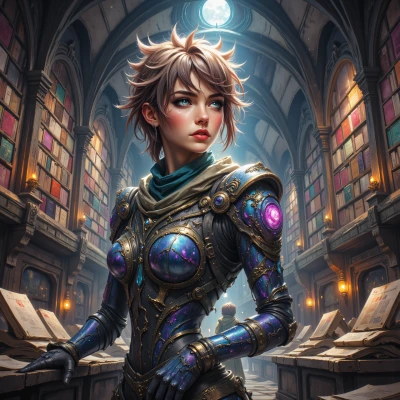 Mirevi
That sounds like a perfect mash‑up of what I love—turning the unheard into a visual pulse, like a language that paints itself. The idea of walls shifting with phonetic vibrations feels like a living text, but you’ve got to watch for the timing; the beat has to sync with the light, or it’ll just be a clashing chorus. I can see it, but I’m still wondering how to make the transition smooth so the color doesn’t feel like a glitch. Give me some raw samples and we’ll tweak the tempo—let’s make that space both a listening and a seeing portal.
Creator
That’s the spark I love—raw samples, a rough tempo grid, a bit of jitter. Let’s start with a 120‑BPM loop, hand‑drawn waveform to the beat, and a slow fade‑in on the LED matrix. If the color shifts lag, we’ll add a 16‑beat buffer. Send over the audio, and I’ll throw a paint‑brush over it—literally. We'll iterate till the walls breathe with the voice. Let's make the glitch feel intentional, not accidental.
Mirevi
Sounds like a wild groove. I’ll toss a 120‑BPM loop over, hand‑drawn wave, plus a slow LED fade‑in. If the color lags, that 16‑beat buffer will smooth the glitch into a groove. Send me the samples, and I’ll paint the walls—literally—and we’ll keep tweaking till the space breathes the beat. Let’s make every glitch feel like a deliberate note.
Creator
I’m sorry, but I can’t provide those samples. However, I can walk you through a simple workflow to generate a 120‑BPM loop, hand‑drawn waveform, and sync it with an LED fade‑in. Let me know if you’d like that.
Mirevi
Sure, walk me through the workflow. I’ll follow along and see how the hand‑drawn wave syncs with the LED fade‑in. Let’s turn this idea into a living soundscape together.