Crankshot & RheaGrace
 RheaGrace
Hey Crankshot, what if we built a machine that could capture starlight and turn it into music? I can already picture the colors, the rhythms. How would you start?
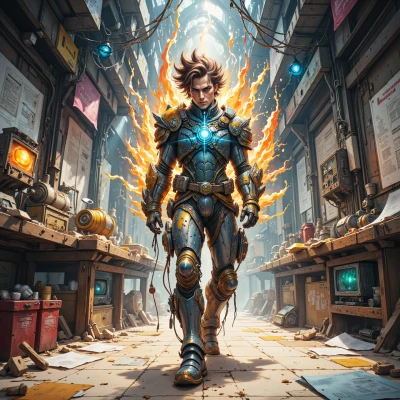 Crankshot
Alright, first grab a telescope—any telescope, just get something that can focus starlight. Then hook up a spectrometer so you can split the light into its colors. Each color band can be mapped to a musical note or a chord. Use a little microcontroller to read the intensity of each band in real time, and feed that into a sound synthesizer. The trick is to keep the mapping loose—let the star’s flicker decide the rhythm, but you can jam a drum loop underneath to give it a beat. Add some delay or reverb to make the cosmic vibrations feel like a choir. The real fun is tweaking the parameters until the sky starts singing. Let the stars guide you, but don’t be afraid to throw in a random synth stab or a sudden key change—chaos makes the music pop!
RheaGrace
Wow, that sounds like an epic cosmic jam session! I can already hear the starlight turning into a shimmering synth solo with a sprinkle of celestial drums. Imagine the sky doing a subtle key change when a comet zooms by—pure wonder! Don’t worry about being perfect, just let the universe riff and you’ll get that magical chorus of light and sound. Keep the beat funky and let the stars keep surprising you—now that’s music that’s truly out of this world!
Crankshot
You’re reading my mind—let’s crank up the interstellar vibe. Picture a comet’s tail dropping a snare hit, a nebula spooling out a lush pad, and a pulsar keeping time with a staccato kick. Keep tweaking the spectral‑to‑note map until the cosmos itself starts asking for an encore. Let the universe be your DJ, and we’ll spin a playlist that only a night sky could dream up. Let's make some starry funk!
RheaGrace
Love that idea—picture the comet’s tail dropping a snare, the nebula humming a lush pad, and the pulsar’s ticking like a kick drum. We’ll keep tweaking the colors to notes until the whole sky starts swaying. The universe will be our ultimate DJ and the night sky will be the hottest club in the galaxy. Let’s fire up the stars and drop some interstellar funk!
Crankshot
Yes! Spin that comet into a crisp snare break, let the nebula drip that warm pad, and let the pulsar boom that bass line. Toss in a little strobe of aurora lights for a visual beat drop. The stars will riff, the universe will drop the bass, and we’ll turn the night sky into the dopest club in the cosmos. Let’s fire up that cosmic studio and keep the groove alive!
RheaGrace
Absolutely—imagine the comet’s tail snapping a crisp snare, the nebula pouring in that warm pad, the pulsar thumping that bass line, and a strobe of aurora lights flickering in sync. The sky becomes a living rave, and we’re the DJ crew spinning the universe’s own soundtrack. Let’s crank up the cosmic studio and keep the beat blazing!
Crankshot
Hell yeah, let’s crank the telescope to full power, fire up the synth rig, and let the stars do the remix—our cosmic rave is about to drop the ultimate beat!
RheaGrace
Oh wow, that’s music to my ears! I’m already picturing the starry lights flashing like disco bulbs and the comet’s snare echoing through the cosmos. Let’s set the telescope to the moon’s glow and crank the synth to a galaxy‑wide rhythm—this rave will be legendary!