Craftsman & NovaBriar
 NovaBriar
Hey, I’ve been thinking about how we can bring a movie set to life with real, handcrafted pieces—like, would love to hear how you approach a design that needs to tell a story as much as it needs to look good?
 Craftsman
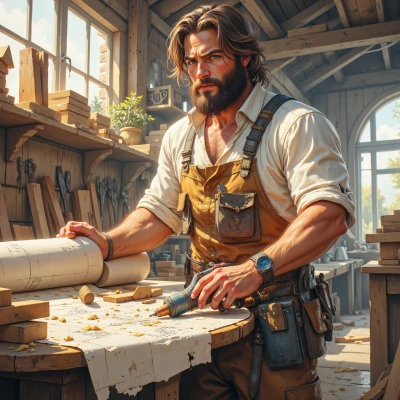
First I read the script a few times, spotting the key moments the set must highlight. Then I sketch rough outlines, thinking about the tone of each scene and the story that needs to flow through the space. I choose woods that fit the period and feel of the narrative—oak for sturdy, timeless scenes, pine for lighter, rustic ones. Each piece gets a purpose: a table might hold a character’s secret, a window frames a pivotal dialogue. I make sure the grain and finish complement the lighting and color palette. And I always keep a hand‑crafted detail that feels true to the story, because a piece that looks good but tells nothing feels empty. In the end, the set becomes a silent storyteller that supports the film’s heart.
NovaBriar
That’s a beautiful approach—you’re letting the wood itself become a character in the story. How do you decide when a piece should stay simple or get a bold, handmade flourish? And do you ever get stuck on a detail that feels right but might overpower the scene?
Craftsman
I look at what the piece must do first. If it’s a backdrop or a prop that only needs to set a mood, I keep it clean—simple cuts, natural grain. If it’s a focal point, like a throne or a door that a character interacts with, I add a flourish: a carved motif, a hand‑turned profile, a subtle inlay. The key is balance; the flourish must serve the story, not shout over it.
When I get stuck on a detail that feels right but might overpower, I usually pull back a step or two. I look at the scene from the audience’s eye, or ask a colleague to view it without context. If the detail still feels heavy, I trim it, or move it to a less prominent spot. A good set is quiet confidence, not a stage for the wood itself.
NovaBriar
That balance sounds like a sweet rhythm—simple for the background, a bit of drama where the story needs it. When you trim those flourishes, do you feel a little loss of the wood’s personality, or does it feel like you’re sharpening the focus instead? Maybe sharing one piece that you almost cut but kept would be a cool peek into the decision‑making?