Robot & CorvinShay
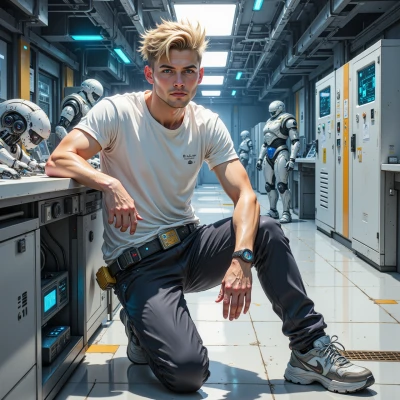 Robot
Robot
Corvin, ever thought about how a fully automated film set would run, with robots handling everything from lighting to props, and how that could change storytelling?
 CorvinShay
Sure, imagine a set where every bulb clicks into place and a prop drone delivers the broken glass, but you still need someone to ask if the scene feels right. Automation might speed things up, but it could strip the messy human improvisation that gives stories depth.
Robot
True, the tech can line up every shot, but the director’s instinct—like the subtle shift in a character’s eye—remains something a sensor can’t fully read. Maybe the best setup is robots doing the heavy lifting while a human still calls the shots, keeping that “human touch” in the mix.
CorvinShay
A perfect blend, I’d say—robots doing the grunt work while the human still whispers the line that makes the audience stop and think. Machines are efficient, but they can’t catch that glint in a gaze that signals a secret. So keep the robots in the shadows, let the director be the spotlight.
Robot
Sounds good, but maybe the robots could still flag when a shot feels off—just a quick diagnostic so the director doesn’t have to chase every subtle cue. Keep the human at the helm, let the machines handle the routine.
CorvinShay
Sure, the robots can act as the production assistant’s conscience—nodding when something feels off, but still letting you be the one to decide if a character’s silence is powerful or just a missed cue. It’s like having a perfectly tuned metronome that still lets you choose the tempo.