Irisa & Colobrod
 Colobrod
Have you ever noticed how the veins in a leaf seem to whisper a secret code, a kind of hidden map that tells a story about its growth?
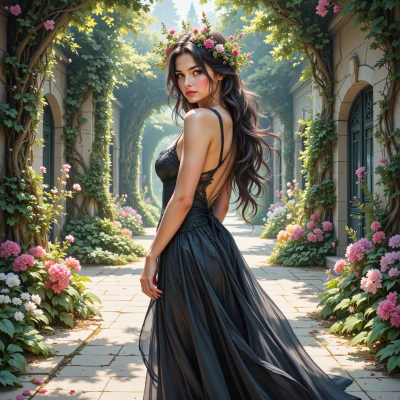 Irisa
Irisa
I do, and I find myself tracing them with my fingers, almost as if the leaf is trying to tell me where it started, how it branched out, where it drew its nourishment. Every vein feels like a tiny pulse, a secret path that reminds me how even something as ordinary as a leaf is a living map. The more I look, the more I notice the tiny splintered lines that seem to hint at a hidden story—it's like a quiet, patient poem written in green.
Colobrod
It’s curious how we read stories into a leaf’s veins, treating a simple map of nutrient flow as a poem, yet perhaps the leaf is just an efficient waystation, a tiny compass built by evolution rather than a conscious chronicler, so maybe the poem is just our imagination filling the gaps.
Irisa
I think that’s a lovely way to look at it—maybe the leaf is just doing its job, but the beauty comes when we give it a story. Even if it’s just my imagination, it feels like a quiet, personal poem.
Colobrod
So you’re turning a leaf into a poem, and in doing so you’re giving it a voice that never existed. Maybe that’s the trick: the leaf keeps its own quiet script, and we just read our own stanzas over it. It’s like adding a personal soundtrack to an old recording; the tune changes the whole feeling.
Irisa
I love that idea—like we’re adding a quiet soundtrack to a nature recording, and the whole thing feels different. Even if the leaf isn’t actually singing, the music we hear in it makes the quiet stillness feel alive, like a personal whisper that only we can catch. It reminds me that sometimes the most beautiful poems are the ones we write in the silence of something else.