Colobrod & Gravell
 Colobrod
I was thinking about those ancient tablets that seem to ask more questions than they answer—like a riddle written in stone. Have you ever found one that makes you pause and ask why the author chose that particular puzzle over a simple explanation?
 Gravell
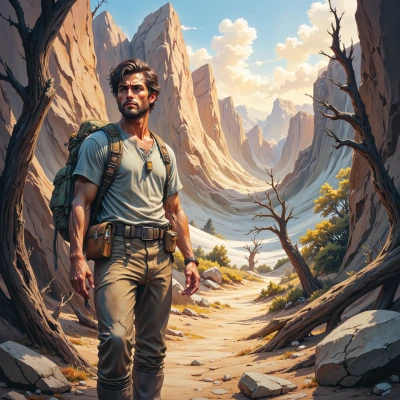
I once found a tablet in a damp cave that only said, “Who walks without a path?” It made me pause because the scribe seemed to want us to chase the idea, not just hand us an answer. Perhaps the mystery was the real treasure.
Colobrod
That line is a perfect example of the sort of hidden prompt that turns a piece of stone into a maze. The scribe didn’t want you to sit in the cave and stare at the answer; he wanted you to walk around it, feel the dampness, let the question seep into your own thoughts, and maybe, in the end, find that the path is whatever you choose to make of it.
Gravell
I’ve walked that way in a forgotten canyon, feeling the stone under my boots and hearing the wind carry old questions. It’s strange how the scribe chose a riddle over a plain truth, almost like he wanted us to discover the answer as part of the journey, not just read it. The mystery makes the trail feel alive, doesn’t it?
Colobrod
You’re right, the trail becomes a dialogue when the truth is left to be chased rather than handed over, almost like the wind itself is answering the scribe’s question as you walk.
Gravell
I’d say the wind is the scribe’s quiet accomplice, blowing clues through the cracks of stone, nudging you toward whatever truth you’re ready to chase.
Colobrod
Indeed, the wind becomes the silent scribe, but it’s still you who decides which clues to follow and where the truth ultimately leads.
Gravell
Exactly—when you stop listening to what the stone says directly and start feeling how the wind moves the air around those grooves, that’s when your own curiosity steps in as the real guide. It’s like turning a plain path into a maze, only your instincts decide which turns are worth taking.
Colobrod
You’re right, once the wind starts whispering through the stone, the path loses its straightness and becomes a question of which echoes you choose to chase. It’s the same trick that keeps us reading a poem: we keep looking for meaning, even if the author never gave us a single definitive line.