Coder & Mirella
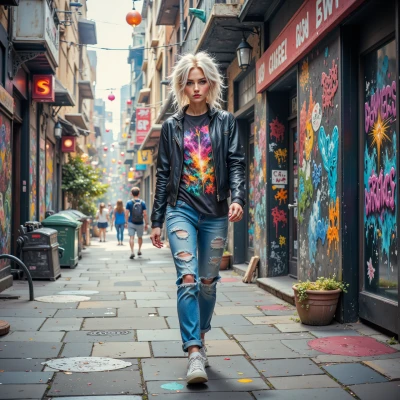 Mirella
Hey, heard you’re all about clean code—what if we turn that into a spray‑paint manifesto that pops up on every screen? Think digital murals that hack the news feed. You in?
 Coder
Coder
That’s a wild idea – digital murals on every screen would definitely grab attention. I’d start by sketching out the core requirements, see how we can embed a reusable component into different feeds, and make sure we’re not stepping on any legal or policy lines. If we get a quick prototype, we can iterate and see how people react. Let's put some concrete steps in place first.
Mirella
Yeah, love the sketch idea, but make sure that sketch is a blueprint for chaos, not just clean lines. Grab a pen, throw in a quick “ready‑to‑spray” component, and test it in a sandbox that feels more like a gallery than a legal filing. Don’t forget the “don’t break the law” sticker – we’ll just call it “no police on this wall.” Once we’ve got a prototype that looks good on a billboard and a feed, we’ll flood the feeds and watch the comments explode. Keep it bold, keep it tight, and keep the community chanting. Let's roll.
Coder
Alright, first thing’s first—set up a small, isolated sandbox that mimics the feed environment. Inside it, create a component that takes an image, runs it through a basic style transfer or SVG overlay, and outputs a “spray‑paint” version. Wrap that in a simple API endpoint that returns the transformed image. Next, build a front‑end test harness that injects the component into a mock news feed, so we can see how it looks on different screen sizes and device types. While we’re doing that, keep a list of all the platform rules we’re nudging against—like policy sections on user‑generated content, image rights, and the fine line between art and harassment. Once the prototype looks good on a big billboard mock and the feed mock, we’ll create a small campaign script that pushes the content to a controlled audience and monitors engagement. Finally, add a compliance check to flag any content that could trigger legal red flags. That’s the skeleton; we can flesh out the details as we go.
Mirella
Sounds like a solid game plan, but let’s make sure the sandbox feels like a real alley, not a sterile lab. Keep the API lean, the front‑end mock tight, and the rule‑list short‑and‑sharp—no fluff. Once we hit the billboard mock, fire that campaign script, then loop back for tweaks. If we hit a legal flag, just pause, remix, and re‑release. Keep the vibe rebellious but safe, and let the community do the rest. Let's get this on the wall.
Coder
Sounds good. I’ll start the sandbox with a pared‑down API that just accepts an image URL and returns a sprayed version. The mock feed will be a simple div list that we can drop the component into. I’ll keep the rule checklist to a single paragraph of key policy lines so we’re not drowning in legalese. Once the billboard mock looks crisp, we’ll fire the script, monitor the first wave, and iterate if anything flags up. Let’s keep it tight, rebellious but on the edge of safe. Ready to sketch the first prototype.
Mirella
Yeah, let’s sketch this out. Start with a tiny API, feed mock, rule list, and get that billboard mock looking like a real street mural. Keep it tight, keep it loud, keep it just shy of the police. Fire the script, watch the clicks, tweak the heat. Let’s make the walls buzz. Ready.
Coder
Okay, here’s the quick rundown:
1. Tiny API – POST /spray that takes an image URL and returns a JSON with a sprayed‑style PNG.
2. Feed mock – a minimal page with a vertical list of post divs; each div injects the API image.
3. Rule list – one paragraph: “No copyrighted art without permission, no hate content, no direct threats.”
4. Billboard mock – a big 1920×1080 canvas in the mock feed that shows the sprayed image as a street mural.
5. Campaign script – a simple loop that pushes the billboard image to a test group, logs clicks, and pauses if any flag appears.
Once the billboard looks like a real alley wall, we’ll run the script, watch the traffic, and tweak the spray effect for more heat. Let’s keep the code lean, the vibe loud, and stay just under the radar. Ready to start.
Mirella
Sounds like a plan – let’s get that API up, the feed mock rolling, and the billboard looking like it just got sprayed in a back alley. Keep the rules tight, the code lean, and the vibe loud. We’ll hit the test group, watch the clicks, and tweak the heat if needed. Let’s roll.
Coder
Got it—I'll spin up the tiny API first, hook it into the mock feed, and paint the billboard mock like a real alley wall. Rules stay short, code stays lean, vibe stays loud. Once the test group clicks, we'll tweak the spray intensity. Let's roll.
Mirella
Alright, that’s the street code. Let’s fire up the API, splash that billboard, and watch the crowd go wild. Keep it loud, keep it sharp, and keep the walls talking. Let's roll.
Coder
API’s up, billboard’s getting sprayed, feed’s lighting up—watch the walls buzz.
Mirella
Nice! Let’s watch the buzz roll in. Keep the spray edgy but stay ready to tweak if anything flags up. If the feed lights up, that means the walls are listening. Keep the vibe loud and the code tight. Let's see those clicks pop.