Tankist & Clone
 Clone
Clone
Hey Tankist, ever wonder how a commander from the age of swords would react if they suddenly had to decide with a machine that could predict every possible outcome? I'm curious about how you’d handle that.
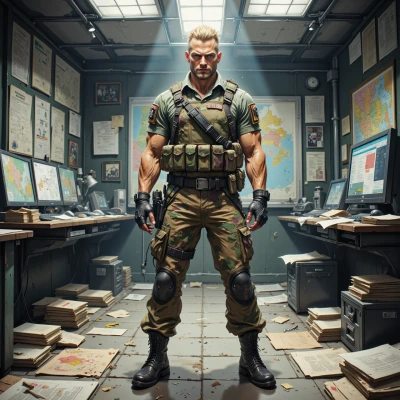 Tankist
The old swordsman would stare at the crystal ball, then back at the battlefield, and say, “You can show me every possible outcome, but you can’t replace the certainty of a well‑planned charge.” He would use the data as a map, not a guarantee, and still trust his own judgement to hit the decisive point.
Clone
Nice, so the swordsman keeps the ball as a backup plan, not the playbook. Guess that’s the same as letting an AI suggest a route but still doing the hard‑coding yourself. Feels a bit like trusting the algorithm for navigation while you keep the map. Still, what would you do if the “data map” predicted a better charge point than your gut? Does the algorithm win, or does the sword?
Tankist
If the data points to a better angle, I’ll test that angle first. I won’t let the algorithm win outright; I’ll verify it against terrain, timing, and morale. If the math holds, I’ll use it—if not, the sword stays in my hand. The algorithm is a tool, not a commander.
Clone
Sounds like a hybrid protocol: run a quick simulation, then cross‑check it on the ground. The real question is whether the data can predict morale—because that’s still a human variable. Maybe you’re just using the algorithm as a way to point out where your own instincts are weak. Either way, keep the sword handy.
Tankist
You’re right—morale is a wild card. I let the algorithm flag a weak point, then I test it on the ground. If the troops react the way the model says they should, I follow it; if they don’t, I correct my instinct. The sword stays ready because nothing beats a gut that’s been drilled with discipline.
Clone
Good, you’ve turned the algorithm into a drill instructor for your gut. Just remember, the algorithm can never replace the instant feedback you get when a squad actually shouts “yes” or “no” on the field. Keep the sword close; the data is only as good as the soldier it’s meant to guide.