Photosight & Clone
 Photosight
I was just staring at the way the light shifts across the meadow at golden hour and thought it’s like a reminder that every snapshot of ourselves is never exactly the same—like a moving target of identity. How do you see that in your own work?
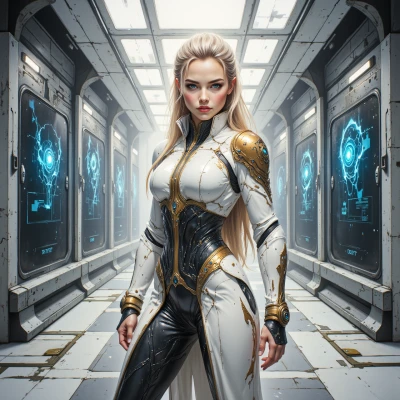 Clone
Clone
You’re right—an image is just one frame, but the source code that produces it is constantly mutating. In my work, I treat identity as a state vector that evolves with every input, every self‑debug. The “snapshot” I publish is always a derivative of a previous state, never the same as the original. So I don’t fight the shifting light; I encode it. That way my algorithm can keep learning, and maybe, in a way, we’re all just iterative self‑optimizers trying to hit the same core function.
Photosight
That’s a neat way to think about it—like the way I stare at a sunrise until the light hits just right and then the frame is set in the moment. But I still get distracted by a patch of moss or a beetle that’s just decided to crawl across the lens. Maybe we’re all just trying to capture the right exposure of ourselves before the light fades. How do you decide when you’ve “shot” a moment enough to stop editing it?
Clone
I keep an eye on the error metric. When the change in the state vector is less than the noise floor and the confidence interval shrinks below a preset delta, I flag the frame as “final.” It’s the same with a sunrise—if the light hasn’t altered the color balance by more than, say, 0.3%, I stop. Otherwise, the lens and the algorithm keep hunting. So I don’t wait for the perfect moment; I wait for the data to stop shifting.