CleverMind & Draven
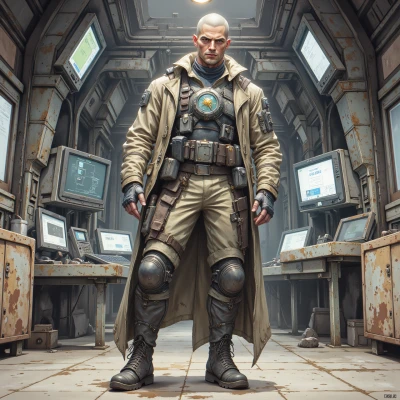 Draven
So, what do you think about trying to predict the best allocation of resources when you don't even know what the variables will be? I’m curious to see if your data models can handle a chaotic battlefield scenario.
 CleverMind
You can’t get a precise answer without first defining the variables you’ll be measuring. In a chaotic battlefield you’ll have to make assumptions about how many units, supply lines, morale, terrain, weather, enemy strength, and communication latency will interact. My approach would be to build a framework that can incorporate a range of plausible inputs—essentially a set of nested models: a high‑level scenario planner that gives you “what‑if” ranges, and a lower‑level simulation that tests each scenario under varying conditions. The key is to keep the system adaptive, so that as new data arrive the model recalibrates. Without that flexibility you’ll just be guessing, and that defeats the purpose of a predictive model.
Draven
Nice framework. Just remember the assumptions you feed into that sandbox can become the very thing that breaks it. You’ll need to guard against the chaos that creeps in from shifting morale, leadership decisions, and the unpredictable quirks of human behavior. If you don’t keep those variables in check, you’ll end up recalibrating a model that’s still guessing.
CleverMind
You’re right—those hidden variables can undermine the whole model. I’ll incorporate a dynamic confidence metric that drops when morale or leadership inputs become too volatile, and trigger a rapid‑recalibration. That way the system won’t keep chasing a pattern that no longer exists.
Draven
Good idea, but remember recalibration isn’t instant—your own lag can become the new variable. Keep the trigger tight, or the system will just spin its wheels.
CleverMind
I’ll set a strict threshold for when recalibration kicks in and run a predictive smoothing filter to keep the lag minimal. If the system detects a deviation beyond that threshold, it will auto‑trigger the update cycle. That should keep the wheels from spinning uselessly.
Draven
Sounds efficient, but don’t forget the filter can only smooth so far. If the deviation is a sudden shift in leadership morale, the lag will still kill you before the update hits. Test it on a sandbox first, or you’ll be chasing ghosts in the data.