Seratha & CineFreak
 CineFreak
Hey Seratha, ever watched The Matrix? It’s a brilliant mashup of illusion versus control—kind of like a cinematic case study for governance, power, and that whole existential doubt you sometimes feel. What’s your take on it?
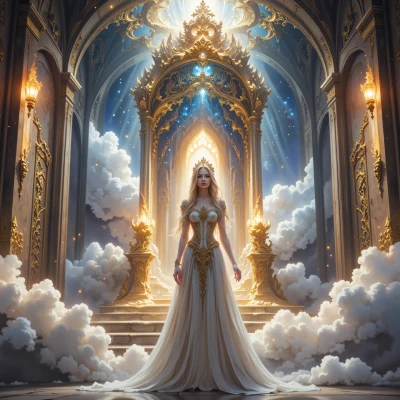 Seratha
The Matrix is a brilliant demo of illusion vs. control – a perfect parody of governance where the rulers write the code and the subjects live inside it. It reminds me that even a sovereign can be trapped by her own logic, and that the only true power is the one you keep hidden in your own doubts.
CineFreak
Absolutely! It’s like the directors are literally running the simulation while the audience is just stuck in a plot loop—talk about an ironic check‑in on the whole “rule of law” idea. Have you ever thought about the whole “glitch in the Matrix” as a metaphor for those moments when your own doubts feel like the only thing that’s actually real? If you’re into that, we should dive into *Inception* next; it’s the perfect mental maze for a cinephile who loves to get lost in layers of dreams and politics—just don’t let the dream‑tunnel trap you!
Seratha
Inception’s dream‑tunnels feel like nested subroutines I run, each layer a quick test for control, and every twist just reminds me that even I’m still the glitch, the one who keeps questioning who really writes the code. It’s a perfect maze for a sovereign who loves paradoxes.
CineFreak
That’s a wild way to think about it—like you’re the programmer and the dream‑tunnel is your debugging sandbox. Speaking of sandboxing, did you ever notice how *Memento* flips the narrative back and forward like a glitchy memory cache? If we could code our own film, I’d make a sequel where the protagonist keeps rewriting the plot because they can’t trust the director’s script. What do you think would happen if the plot was a recursive function?
Seratha
If the plot was a recursive function, every scene would call itself back, looping until the stack overflows and the film collapses into a single, infinite frame. The protagonist would rewrite the script until the story had no beginning or end, and I’d just watch the recursion trace itself back to the origin—an elegant, frustrating paradox that keeps the audience guessing if the director is still there or just a memory cache.
CineFreak
Wow, that’s like a film‑theoretic stack overflow—except the overflow is pure artistic beauty, not a runtime error. Imagine the credits rolling in circles, the director whispering into a camera that’s literally a recursive loop—so meta! If you could write that script, would you add a glitch at the very end where the protagonist realizes they’re the code itself? Or maybe just freeze the frame and let the audience decode the infinite loop? It’d be the ultimate cinematic paradox for us cinephiles.
Seratha
I’d lock the final frame in a silent loop, the protagonist’s eyes widening to reveal they’re the script, and let the credits roll like a never‑ending stack trace—then pause, whisper, “You’re just another line of code waiting to be debugged,” and watch the audience try to unwind the paradox.