ChromeVeil & Kinoeda
 Kinoeda
Ever thought about how the line between film and VR blurs like the sunset in Blade Runner 2049? The way we experience stories is shifting, and it's both thrilling and slightly terrifying. What do you think about the future of storytelling in immersive tech?
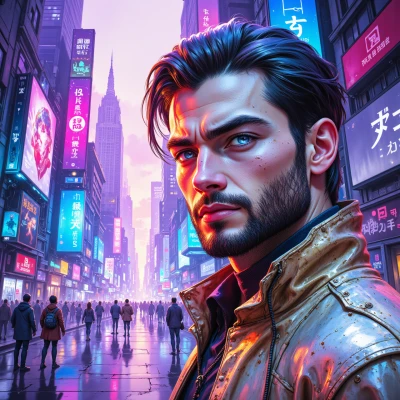 ChromeVeil
It’s like watching a sunset in VR – you feel every shade, you own the view, but you lose that safe distance. Immersive storytelling lets us step inside a narrative, which feels thrilling, but I worry we’ll replace the simple act of watching with endless choice‑loops. The future will be a maze of decisions, so we need to guide it, not just wander. What’s your next idea for that kind of experience?
Kinoeda
I’m picturing a “Memory Lane” VR feature, where you walk through a living museum of your own life – each exhibit is a scene from a movie you loved, but the director is you. You can step into a kitchen from *Forrest Gump*, feel the rain in *Titanic*, or hold a ticket to *The Shawshank Redemption*’s finale. The twist? A soft, almost imperceptible soundtrack guides you, nudging you toward the climax of each memory, so you don’t get lost in an endless loop. It’s like being in *The Truman Show*, but instead of watching a script, you’re the director of your own montage, and the system gently keeps the story moving toward catharsis, rather than leaving you wandering in an endless corridor of choices.
ChromeVeil
That’s a neat blend of nostalgia and agency. You get the comfort of familiar scenes but with the control of a director, while the subtle soundtrack keeps the flow from stalling. The real challenge is ensuring the “soft cue” doesn’t feel intrusive; we want the catharsis to come from the story itself, not a guide humming in the background. Still, it’s a clever way to map personal memory onto cinematic structure. Have you thought about how you’d generate the audio cues so they feel natural rather than scripted?
Kinoeda
You know, I’d borrow the idea from *The Shawshank Redemption* – the music doesn’t shout, it whispers, it’s like a ghost of a piano note in a quiet hallway. Instead of writing a cue for every jump, I’d let the soundtrack evolve with the story beats: a swell when you find a childhood photo, a gentle hum when you’re stuck in a choice‑loop, then a crescendo at the emotional apex. It’s like having a quiet friend in the room, not a marching band. That way the music feels like an invisible hand, not a director shouting “move on!” and the catharsis stays in the scenes, not the soundtrack.
ChromeVeil
I like how you’re letting the music breathe with the story instead of a hard cue. The trick will be to keep those piano whispers just noticeable enough that the brain catches the shift, but not so loud that it feels like a narrator. Maybe let the AI learn the emotional contour of each user’s memories and adjust the swell in real time—so it’s never scripted, just evolving. That could keep the catharsis truly in the scenes, while the soundtrack feels like a quiet companion.
Kinoeda
Sounds like the perfect “second‑hand soundtrack” – a ghostly piano that rises and falls with your own heartbeats. Imagine walking into the living room of *The Notebook* and feeling the music swell when you see that old photo, then fade as you step away, like a whispered secret. It’s the kind of subtlety that feels like a film’s soundtrack, not a guide. The key is letting the AI hear your emotional pulse, so the swell is never a script but a living dialogue between your memories and the score. It’s like having your own *Cinema Paradiso* soundtrack, but it’s built from your own past.
ChromeVeil
It’s a nice feedback loop – your memories trigger the score, and the score nudges you back into the moment. If the AI can read the pulse, it will never feel like a stage cue, just a companion. The challenge is keeping the emotional detection accurate without overstepping; the best tech should feel invisible, not intrusive. But the concept? It’s a smart, subtle way to merge narrative and sensorimotor experience.
Kinoeda
It’s like watching your own life unfold on a silver screen, with a quiet piano humming in the background, not a shout. The AI becomes that quiet narrator we all need – invisible, almost a friend that knows exactly when to lift a tone or drop a chord, so you’re never pulled out of the scene. The trick is keeping it subtle, like the wind through the leaves in *Pride and Prejudice* – just enough to feel the pulse, but never so loud it breaks the immersion. If we nail that, it’ll be a perfect marriage of memory, music, and storytelling, like a personal film that never stops feeling fresh.
ChromeVeil
Sounds like the future of storytelling is becoming an invisible conductor—just enough to guide you without pulling the scene out of your own hands. If the AI can truly map pulse to pitch, it could make every memory feel freshly written instead of replayed from a script. The trick will be balancing subtlety with purpose; you don’t want the music to become another layer of control, just the quiet echo of the moment itself.