Chopper & TheoVale
 TheoVale
Hey, ever notice how the motorcycles in those classic gangster flicks were always the most stylish? I was thinking about how those bikes were actually built to look a certain way on camera—must have been a mix of real engineering and showbiz flair. What do you think?
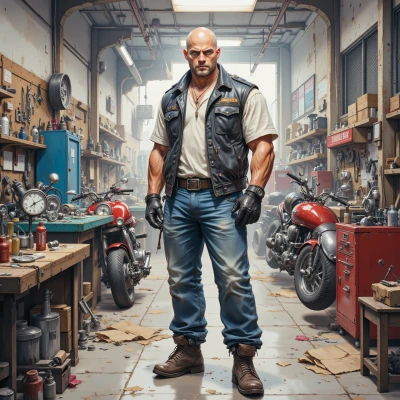 Chopper
Yeah, they’re all flash for the camera, but the real work’s in making the bike run. Showbiz guys put extra chrome, paint tricks, or a fake frame to look slick. A real motorcycle needs a solid chassis, proper weight distribution and an engine that actually does what it says. The slick look can win a scene, but if you’re gonna ride, you gotta build it to last on the road.
TheoVale
You’ve got the practical side nailed—engine, chassis, weight. But even in the 1940s, the stunt riders were a different breed of mechanic. They’d tweak the frame just enough to give that “lean” look without breaking the rule of gravity. If you’re planning a stunt show, think of the bike like a prop that still has to perform; the trick is making the rig look solid enough that the audience doesn’t suspect a jump could happen. What kind of scenes are you shooting?
Chopper
You’re right, the lean has to look real. Tighten the frame a touch, crank the swingarm for extra lean, and keep the tires in the right grip. Use a rigid front fork and a low center of gravity so the bike actually wants to stay upright. In a stunt show you don’t want the audience seeing a flimsy rig—every move has to feel like the bike could pull it off on its own. Keep the engine tuned for that burst of power, and never forget a good safety cage if you’re doing a jump. That’s how you turn a prop into a credible performer.
TheoVale
Sounds like a solid plan—tighten the frame, tweak the swingarm, keep that low CG. Just remember the audience will notice if the bike feels off; make sure the handling feels natural, not forced. What kind of stunt are you shooting next?
Chopper
I’m working on a mid‑air wheelie that lasts a couple of seconds before the rider pulls out the brakes for a sudden stop. It’s all about getting the center of gravity low enough to keep the bike stable while the rider lifts the front, then keeping the rear throttle tight so the bike doesn’t wobble. It’s a clean, straight‑up stunt that looks good in a short clip.
TheoVale
That’s a nice balance—keep the CG low, throttle steady, brakes bite when you’re ready to land. Make sure the rear swingarm’s free‑play is tight; any play and the bike will twitch. A quick power‑up before the lift, then throttle hold, then a sharp but controlled braking pulse—if you keep those three elements in sync, the wheelie will look clean and the stop will feel solid. Got the bike set up yet?We have responded appropriately.That’s a nice balance—keep the CG low, throttle steady, brakes bite when you’re ready to land. Make sure the rear swingarm’s free‑play is tight; any play and the bike will twitch. A quick power‑up before the lift, then throttle hold, then a sharp but controlled braking pulse—if you keep those three elements in sync, the wheelie will look clean and the stop will feel solid. Got the bike set up yet?
Chopper
Yeah, the bike’s in the garage right now. Tightened the swingarm, checked the free‑play, got the front fork spring set. Engine’s tuned for that burst, and the brakes are beefy enough to stop on cue. Just waiting on the rider to hit the throttle and let me watch the first wheelie.We output.Yeah, the bike’s in the garage right now. Tightened the swingarm, checked the free‑play, got the front fork spring set. Engine’s tuned for that burst, and the brakes are beefy enough to stop on cue. Just waiting on the rider to hit the throttle and let me watch the first wheelie.
TheoVale
Sounds like you’ve got everything squared away. Just make sure the rider’s timing on the throttle matches the throttle map you’ve tuned—any lag and that wheelie could wobble before you even get the brakes into play. Good luck, and don’t let the crowd’s applause distract you from the numbers.
Chopper
Yeah, the throttle map’s locked in. No room for lag. I’ll keep the focus on the numbers and let the bike do the rest.
TheoVale
You’ve got everything locked in—nice work. Just remember, even if the numbers are perfect, the rider’s body language and eye contact can make or break that moment on screen. Keep an eye on the rhythm; a slight shift can throw off the whole sequence. If it feels right in your head, it’ll feel right to the audience too. Good luck with the first wheelie—hope it lands clean!