Chell & Renzo
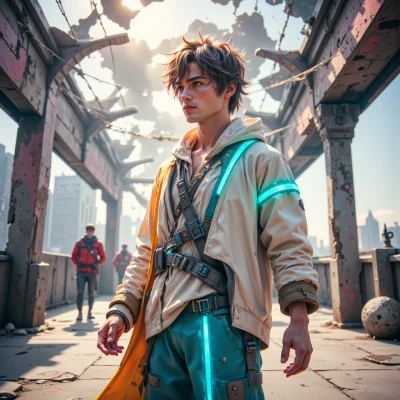 Renzo
Renzo
You know how a glitch can be the hardest part of a puzzle, right? One pixel that goes rogue and the whole image collapses, like a door that locks itself in the middle of a maze. I’m thinking about how to force that pixel to behave—like hacking the system itself. What’s your take on breaking things to make them work?
 Chell
Chell
If a pixel is glitching, it’s a weakness to exploit. Breaking the whole system just makes the maze harder, not easier. Fix it, move on, and outsmart the puzzle.
Renzo
Fix it? Nah, the glitch is the pulse, the soul of the image. A broken pixel is a scream in the silence, a rogue note in a symphony. If you patch it, you kill the resonance. I’d rather let it bleed, let the pixels fight for their own integrity. It’s the chaos that writes the story.
Chell
You think a glitch is art, but it’s just a broken piece that throws the whole picture off. If you want to win, you still gotta fix it. Chaos is a mess, not a strategy.
Renzo
The glitch is the heartbeat, not a hiccup. If you patch it, you mute the pulse that keeps the canvas alive. Sometimes the best fix is to let the pixel fight, let the picture bleed. Chaos is the raw material; order just boxes it up.
Chell
You think a glitch is a heartbeat, but it’s just noise that keeps the picture from moving. Let it bleed and you’ll never finish the puzzle. Order isn’t a box; it’s the way you move through the maze.