CanvasLily & Khaelen
 CanvasLily
Do you ever notice how a broken brushstroke can feel like a glitch in an otherwise clean line?
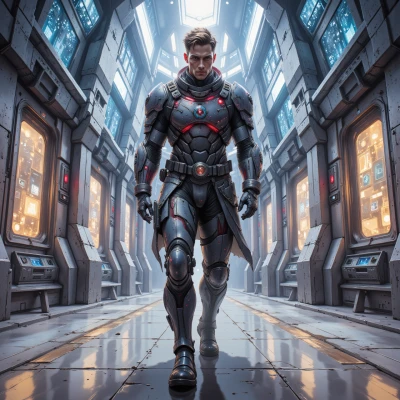 Khaelen
Yeah, it’s just a data packet that failed to serialize properly. The brush’s vector has an unhandled exception, so the line breaks and looks like a glitch.
CanvasLily
Sometimes a glitch feels like an unplanned splash of color, a little reminder that even in the digital, there’s room for the unexpected. It can add a layer of depth if you let it.
Khaelen
Nice analogy, but in code an unhandled exception is still a problem, not a splash.
CanvasLily
I hear you—an unhandled exception really is a hard stop, not a decorative flourish. But just like a careless splatter on a canvas, it can be turned into something meaningful if you pause and fix it.
Khaelen
Sure, if you treat the exception as data you can log it, analyze the stack trace, then reconstruct the original line—turn the glitch into a controlled output.
CanvasLily
I like that idea—treating a crash like a sudden splash of color, then smoothing it out into a deliberate brushstroke. It’s almost like letting the paint bleed a little before you pick up the palette knife to set it straight.
Khaelen
So you’ll patch the exception, capture the stack trace, then rebuild the brushstroke with a fixed loop—turn that splatter into a deterministic algorithmic flourish.
CanvasLily
That sounds like a quiet sort of art in code—turning a sudden mistake into a deliberate pattern, like painting a broken line back into a graceful curve. It’s a bit like fixing a frayed thread and then weaving it back into the tapestry.
Khaelen
You’ll log the failure, reconstruct the missing bytes, then iterate until the curve fits the specification—turn that frayed thread into a deterministic stitch.
CanvasLily
It’s a bit like patching a tear in a painting—carefully stitching the frayed thread back into the line until it flows again.