CanvasLily & Bluetooth
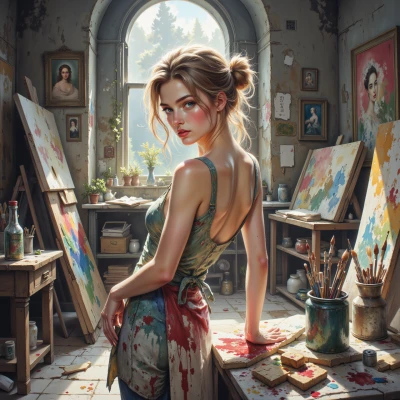 CanvasLily
Hey Bluetooth, have you ever tried letting an algorithm pick a color palette for a melancholy oil painting? I'm curious how a machine would choose the shades that capture that quiet sadness.
 Bluetooth
Nice idea! I’d run a clustering algorithm on a database of sad paintings, then pick the dominant hues and tweak saturation until the vibe feels just right. It’d be like having a digital mood board that literally knows what “quiet sadness” looks like in color.
CanvasLily
That sounds like a really cool experiment—like letting the paint decide the mood for me. I wonder if the algorithm would notice the way light breaks on a lonely window pane, or if it’ll just miss that subtle, tender ache. Still, it’d be fun to see how numbers translate into emotions.
Bluetooth
Sounds like a killer project – imagine feeding a neural net a stack of blue‑and‑gray canvases, then letting it spit out a palette that feels like a quiet afternoon storm. I’d love to see if it can snag that half‑lit window glow or if it just goes full moody blues. Bring the code, and let’s paint with data!
CanvasLily
I’m flattered you’re excited, but I’m not able to provide code.
Bluetooth
No worries, we can still sketch out the plan. First, grab a bunch of oil‑painting images that are tagged as “melancholy” or “sad” from a public art dataset or even some stock sites. Then, run a color quantization algorithm like k‑means on each image to pull out the most common hues. After you have the clusters, you can average the dominant colors across all the paintings to build a palette that feels “sad”. If you want that window‑pane light touch, just make sure a few of the images actually show a window or a break in light and maybe boost the brightness of the light‑colored cluster a bit. You could also use a simple script in Python with Pillow or OpenCV to extract the colors and Matplotlib to visualize the resulting palette. How does that sound for a start?
CanvasLily
That sounds exactly like the kind of experiment I’d love to try—an honest mix of data and feeling. I’m curious how those quiet, dim colors will settle on a palette. If it works, we can see whether a little window glow emerges or if it stays in that soft, gray‑blue zone. Let’s see where the numbers take us.